
You stand in line at the pharmacy, clutching your prescription slip. You’ve been waiting for fifteen minutes, and when you finally reach the counter, the pharmacist slides a brown bottle across with a quick nod. Do you just grab it and leave? Or do you stop and ask the questions that could actually save your health?
Too many of us treat pharmacists like vending machines for pills. But they are highly trained healthcare professionals who understand medications better than almost anyone else-including your doctor. In fact, community pharmacists are the most accessible healthcare providers in the United States, with 94% of Americans living within five miles of one. Yet, studies show that nearly half of patients misinterpret dosing instructions, leading to suboptimal treatment or worse.
Asking the right questions isn’t just polite; it’s a critical safety step. Medication errors cause over a million emergency room visits every year. Many of these could be prevented with a simple conversation. Here is exactly what you need to ask to get the most out of your prescription.
Clarify the Purpose and Expectations
It sounds obvious, but would you believe that 30% of medication errors happen simply because patients didn’t understand what their drug was supposed to do? Before you walk out the door, make sure you can answer this: "What is this medication for, and how will I know it’s working?"
Your pharmacist can explain the mechanism in plain English. Are you taking an antibiotic to fight an infection, or a statin to lower cholesterol over months? Knowing the goal helps you stay motivated. Ask specifically:
- "When should I expect to feel improvement?" Some drugs work overnight; others take weeks. If you don’t see results by day three, do you panic, or do you wait?
- "How long do I need to take this?" This is crucial for antibiotics (finish the course) versus chronic conditions like hypertension (take it indefinitely). Misunderstanding duration leads to relapse or resistance.
If you can’t explain the purpose of your pill back to the pharmacist, ask again. It’s not stupid-it’s smart.
Nail Down the Administration Details
"Take twice daily" seems clear until you realize you’re taking it before breakfast and after dinner, but the label says "with food." Small timing errors can render a drug ineffective or upset your stomach. Don’t guess. Ask these specific administration questions:
- "Should I take this with food or on an empty stomach?" Some drugs, like certain antibiotics, lose potency if taken with dairy or antacids. Others, like NSAIDs, must be taken with meals to prevent gastric bleeding.
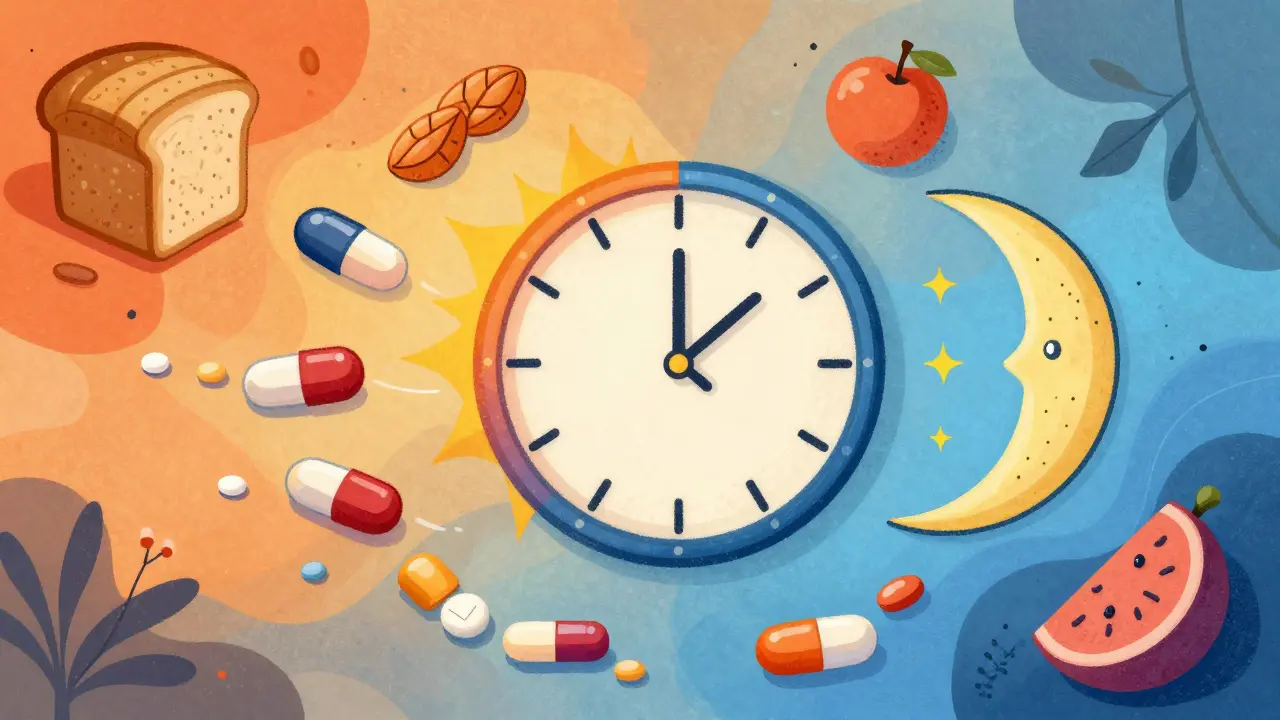
- "What time of day is best?" Statins often work better at night. Diuretics should be taken in the morning to avoid waking up at night to urinate. Sedating antihistamines belong at bedtime.
- "Can I crush or split this tablet?" Never assume. Extended-release formulations are designed to dissolve slowly. Crushing them dumps the entire dose into your system at once, which can be dangerous.
If you have a complex routine, ask for help organizing it. Pharmacists can suggest pillboxes or apps that sync with your schedule.
Manage Side Effects Proactively
Fear of side effects makes people skip doses. Instead of avoiding the topic, lean into it. Ask: "What are the most common side effects, and which ones are serious?"
There’s a big difference between mild nausea that goes away after a few days and a rash that signals an allergic reaction. Your pharmacist can help you distinguish between "nuisance" symptoms and "danger" signs.
- "How can I manage expected side effects?" If drowsiness is common, maybe switch to evening dosing. If dry mouth occurs, sugar-free gum might help.
- "Which side effects require immediate medical attention?" Know the red flags. For example, with blood thinners, unusual bruising or bleeding gums means you need to call your doctor immediately.
Also, consider seasonal factors. If you’re starting a new acne medication in spring, ask about sun sensitivity. You might need to adjust your sunscreen routine.
Check for Dangerous Interactions
This is arguably the most important category. Doctors prescribe based on your diagnosis, but pharmacists check against your entire chemical inventory. Did you mention that herbal supplement you bought online? The over-the-counter painkiller you take for headaches? The alcohol you drink on weekends?
Ask directly: "Does this interact with any of my other medications, supplements, or foods?"
Interactions aren’t always dramatic. Sometimes they just reduce effectiveness. Other times, they’re life-threatening. For instance, mixing certain antidepressants with St. John’s Wort can cause serotonin syndrome, a potentially fatal condition. Combining blood pressure meds with hawthorn berry supplements can drop your pressure too low.
Bring a complete list to the counter. Include vitamins, herbs, and even frequent OTC purchases like ibuprofen or acetaminophen. If you don’t have a list, ask the pharmacist to help you create one. The FDA recommends using their "My Medicine Record" form to capture all details.
Plan for Missed Doses and Cost Savings
Life happens. You’ll miss a dose. Will you double up tomorrow? Take it as soon as you remember? Or skip it entirely? The wrong choice can spike your blood levels or cause withdrawal symptoms.
Ask: "What should I do if I miss a dose?" Get the rule written down or saved in your phone.
Then, talk money. Prescriptions can be expensive, and cost is a major reason people don’t fill prescriptions. Don’t suffer in silence. Ask:
- "Is there a generic version available?" Generics contain the same active ingredients and are legally required to have identical therapeutic effects, yet brand-name drugs often cost 80-85% more.
- "Are there coupons, discount programs, or alternative pharmacies?" Many chains have membership clubs that lower prices significantly. Community pharmacies might also offer mail-order options for maintenance medications.
A study from the University of Michigan found that patients who asked at least three specific questions experienced 65% fewer medication-related problems. Making cost part of the conversation ensures you actually afford the treatment you need.

Understand Monitoring and Follow-Up
Medication isn’t a set-it-and-forget-it deal. Your body changes, and so does the drug’s impact. Ask: "Will I need regular tests to monitor this medication’s effectiveness or safety?"
Some drugs require blood draws to check liver function, kidney health, or electrolyte balance. Knowing this ahead of time prevents surprise lab appointments. Also, ask: "How will we know if this medication is no longer working?"
Conditions evolve. A dosage that worked last year might not work today. Establishing a timeline for follow-up with your prescriber ensures you stay on track. If you’re unsure when to call your doctor, ask the pharmacist for guidance on warning signs that warrant a professional review.
| Category | Key Question to Ask | Why It Matters |
|---|---|---|
| Purpose | "When will I feel better?" | Prevents premature discontinuation |
| Administration | "With food or empty stomach?" | Ensures proper absorption and safety |
| Side Effects | "Which symptoms are emergencies?" | Distinguishes nuisance from danger |
| Interactions | "Does this clash with my supplements?" | Prevents adverse drug events |
| Cost | "Is a generic available?" | Saves significant money without sacrificing efficacy |
Tips for a Successful Consultation
Pharmacists are busy. They might be processing hundreds of prescriptions a day. To get the best advice, prepare. Bring your complete medication list. Arrive during off-peak hours if possible-early morning or mid-afternoon often has shorter lines.
Use the "teach-back" method. After the pharmacist explains something, say, "Just to make sure I got it right, I’ll take this pill with breakfast every day." This confirms understanding and builds trust. Remember, they are on your team. As one FDA expert noted, "We’re here to help. We do our best to answer every question."
Don’t let embarrassment or haste stop you. That five-minute conversation at the counter is the difference between a medication helping you heal or hurting you. Be bold. Be specific. Ask the questions.
Is it okay to ask my pharmacist questions instead of my doctor?
Absolutely. Pharmacists are medication experts. While doctors diagnose conditions, pharmacists specialize in how drugs work, interact, and affect the body. They are often more accessible and can clarify dosing, side effects, and interactions instantly.
What should I do if I miss a dose of my medication?
Always ask your pharmacist for the specific protocol for your drug. Generally, if it’s close to the next dose, skip the missed one. Never double up unless instructed, as this can lead to toxicity. Write down the rule when you first pick up the prescription.
Do generic drugs work the same as brand-name drugs?
Yes. By federal law, generics must have the same active ingredient, strength, dosage form, and route of administration as the brand-name drug. They provide identical therapeutic effects but cost significantly less, often 80-85% cheaper.
How can I tell if a side effect is serious?
Ask your pharmacist to list "red flag" symptoms. Common side effects like mild nausea may fade. Serious ones include difficulty breathing, swelling, severe rash, or unusual bleeding. If you experience these, seek medical attention immediately.
Should I tell my pharmacist about herbal supplements?
Yes, always. Herbal supplements like St. John’s Wort or hawthorn berry can interact dangerously with prescription medications. Pharmacists need a complete picture of everything you ingest to prevent adverse drug interactions.