
MedWatch Report Eligibility Checker
Use this tool to determine if your experience qualifies as an event that should be reported through FDA MedWatch. If you answered 'Yes' to any of the criteria below, your report may help identify safety issues with medical products.
Every year, millions of people take prescription drugs, use medical devices, or apply cosmetics - and most of them do so without issue. But sometimes, something goes wrong. A medication causes a severe rash. A glucose monitor gives wrong readings. A cream triggers swelling. When that happens, your report could help save someone else’s life.
What Is MedWatch, Really?
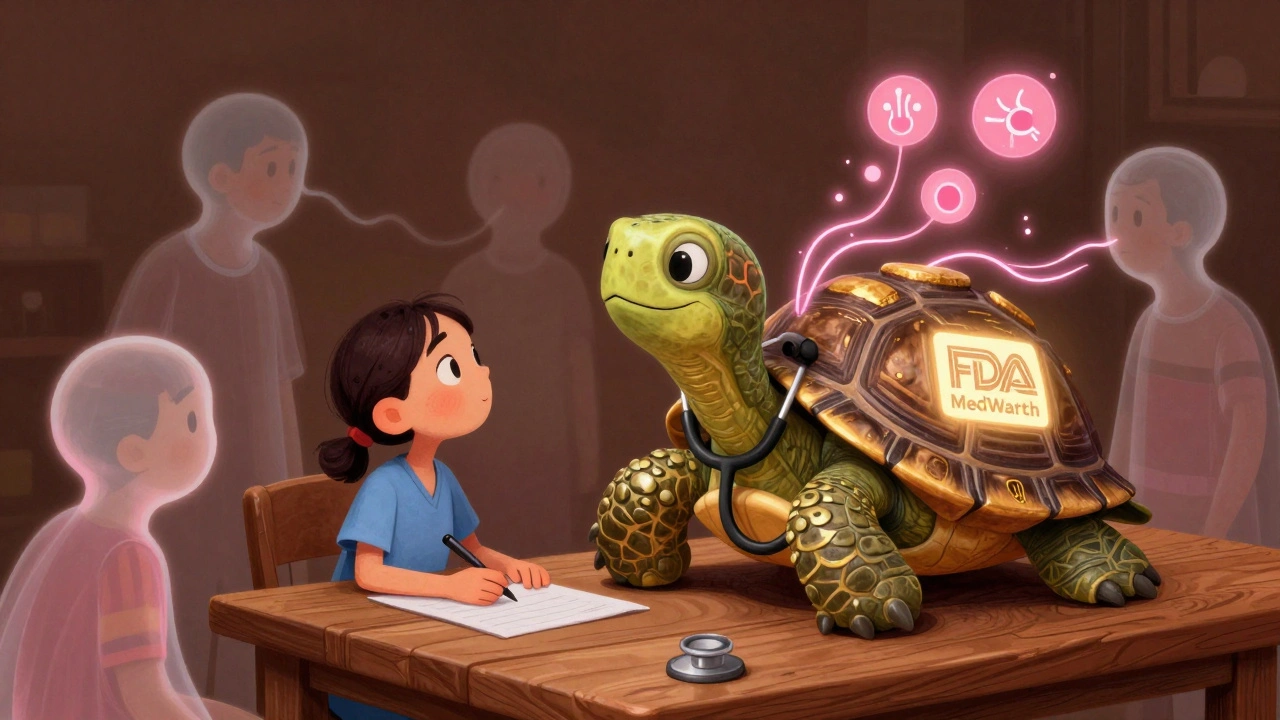
MedWatch is the U.S. Food and Drug Administration’s official system for tracking dangerous side effects and product failures. It’s not a hotline. It’s not a complaint portal. It’s a safety net. Every report submitted through MedWatch helps the FDA spot patterns that clinical trials might have missed. A drug that works fine for 10,000 people in a trial might cause a rare but deadly reaction in 1 in 50,000. That’s the kind of signal MedWatch finds.
The system covers almost everything the FDA regulates: prescription and over-the-counter medicines, medical devices like insulin pumps or hearing aids, biologics like blood transfusions and gene therapies, even CBD products and certain cosmetics. It doesn’t cover vaccines (those go to VAERS) or animal products. But for human medical products? MedWatch is the only official channel.
What makes MedWatch powerful is that it works two ways. Doctors, nurses, and hospitals must report serious problems - it’s the law. But you, as a patient or caregiver, can report too. And your report matters just as much.
When Should You Report?
You don’t need to be a doctor to know when something’s wrong. If you or someone you care about has had a reaction that meets any of these criteria, report it:
- It led to hospitalization
- It caused permanent disability
- It threatened your life
- It resulted in death
Even if you’re not sure it was the product’s fault, report it anyway. The FDA doesn’t assume guilt - they look for patterns. If five other people report the same reaction with the same device, that’s a red flag. One report? Just a story. Ten? That’s a safety issue.
Examples: A diabetic’s glucose meter consistently reads too low after a firmware update. A woman develops liver damage after starting a new weight-loss supplement. A child has a seizure after using a new topical cream. These aren’t rare. They happen. And they’re reportable.
How to Report: Two Forms, Two Paths
There are two main forms, and which one you use depends on who you are.
For Patients and Consumers: Form FDA 3500B
This is the simple version. It’s designed for people without medical training. You can fill it out online at fda.gov/medwatch or download a PDF to mail in. The form asks for basic info: your name, contact details, what product was involved, when you used it, what happened, and how it affected you.
But here’s the catch: the language can be confusing. Terms like “event abated” or “dose frequency” aren’t everyday words. If you don’t know what they mean, you’re not alone. Nearly two-thirds of consumers in FDA surveys said they needed help understanding at least three terms on the form.
That’s why the FDA says: “Take the form to your doctor.” You don’t need them to fill it out - but they can help you describe what happened accurately. Your medical record has details you might forget: exact dosage, timing, lab results. That info turns a vague complaint into a clear signal.
For Healthcare Professionals: Form FDA 3500
Doctors, nurses, pharmacists - you use Form FDA 3500. It’s more detailed. You’ll need to include your license number, specialty, and whether you’ve already told the manufacturer. You’re expected to know medical terms. Most professionals say it takes 10 to 15 minutes. One nurse practitioner told the FDA: “Getting that acknowledgment letter made me feel like my voice counted.”
And yes - you’re required to report serious events. But even if you’re not legally obligated, reporting is part of ethical care. You’ve seen the side effects. No one else has.
What Happens After You Submit?
Once you hit “submit,” you get an automatic confirmation email. That’s it. No follow-up call. No case number. That’s normal. The FDA doesn’t respond to every report individually - there are over a million a year.
But here’s what actually happens behind the scenes:
- Reports are entered into a database that links similar events across the country.
- Analysts look for clusters: “Did 12 people report kidney failure after taking Drug X in the last 3 months?”
- If a pattern emerges, the FDA investigates. They might update the drug label, issue a warning, or even pull the product.
It’s slow. It’s quiet. But it works. In 2020, MedWatch data helped trigger a recall of a popular insulin pen after reports of inconsistent dosing. In 2022, it flagged a new interaction between a common antibiotic and a blood thinner - leading to updated prescribing guidelines.
Don’t think your report won’t make a difference. The FDA estimates that only 1% to 10% of adverse events are ever reported. That means your report could be the one that starts the chain reaction.
What You Can’t Do - And What You Can
Let’s clear up some myths.
Myth: “My doctor has to report this.”
Truth: Your doctor is allowed to report - but not required to unless they’re a facility that uses the product. You can report yourself. No permission needed.
Myth: “I don’t have proof it was the product.”
Truth: You don’t need to prove it. The FDA doesn’t need certainty - they need clues. If enough people report the same thing, they’ll investigate.
Myth: “I reported last year. Do I need to do it again?”
Truth: If it’s the same product and same reaction, yes. Each event is a separate data point. One report might be noise. Ten reports? That’s a trend.
How to Make Your Report More Useful
Even if you’re not a medical expert, you can make your report stronger:
- Be specific: Instead of “I felt sick,” say “I had vomiting and dizziness starting 2 hours after taking the pill on June 15.”
- Include dates: When did you start the product? When did symptoms begin? When did they end?
- Write down the product details: Name, dose, lot number, expiration date. If it’s a device, write down the model number.
- Don’t guess: If you don’t know the exact dose, say “I think it was 10 mg” - but don’t invent numbers.
- Keep a copy: Save the confirmation email. You might need it later.
And if you’re unsure? Call the FDA’s MedWatch hotline at 1-800-FDA-1088. They can walk you through it. No judgment. No pressure.
Why This Matters - Beyond Your Own Experience
Think of MedWatch as crowd-sourced safety monitoring. Clinical trials test drugs on thousands. But real life? Millions of people use products every day, with different health conditions, diets, genetics, and habits. That’s where the hidden risks show up.
One report might seem small. But when 500 people report the same reaction to a new acne cream? That’s how the FDA finds out it causes severe scarring in people with darker skin tones - something never seen in trials.
It’s not about blame. It’s about safety. Every report helps improve labeling, change manufacturing, or even stop a dangerous product before it harms more people.
And if you’ve ever worried your reaction was “too small” to mention? That’s exactly the kind of thing that gets missed - until someone speaks up.

What’s New in 2025?
The FDA hasn’t stopped improving MedWatch. In 2021, they launched a redesigned online portal that works better on phones. In 2023, they announced plans to integrate MedWatch with electronic health records - so doctors could report side effects with one click during a patient visit.
They’re also testing AI tools that help patients fill out forms by suggesting the right terms based on what they type. Want to say “my heart felt like it was racing”? The AI might suggest “palpitations” - the medical term they need.
And they’re working on better ways to track combination products - like a prefilled syringe that delivers both a drug and a device. Those are getting more common, and harder to track.
But the core hasn’t changed: your report matters.
Frequently Asked Questions
Can I report a side effect from a supplement I bought online?
Yes. The FDA regulates dietary supplements, even if they’re sold online. If a supplement caused hospitalization, serious injury, or death, report it through MedWatch. You’ll need the product name, brand, lot number, and what happened. Even if it’s not FDA-approved, it’s still reportable.
Do I need to tell my doctor before I report?
No, you don’t need permission. But it’s smart to talk to your doctor first. They can help you describe what happened accurately and might have records that make your report stronger. The FDA says: “Your health care provider can provide clinical information based on your medical record.” But you can still report on your own.
What if I don’t know the exact name of the medicine or device?
Try to find it. Look at the packaging, bottle, or box. If you can’t, describe it: “a blue pill with a V on one side,” or “a small device that clips onto my finger.” The FDA has databases to match descriptions. It’s better to give a detailed description than to leave it blank.
Is MedWatch only for U.S. residents?
Yes. MedWatch only accepts reports about products used in the United States. If you’re outside the U.S., contact your country’s health authority - like the UK’s MHRA or Canada’s Health Canada. But if you took a U.S.-manufactured product while visiting the States, you can still report it.
How long does it take for the FDA to act on a report?
There’s no set timeline. Some reports lead to quick warnings - like a label change within weeks. Others take months or years, especially if the signal is weak or the product is rare. The FDA doesn’t act on one report. They wait for patterns. But your report is part of the data that builds that pattern.
Next Steps: What to Do Today
If you’ve ever had a bad reaction to a drug, device, or cosmetic - even if it was years ago - go to fda.gov/medwatch. Find the consumer form. Fill it out. It takes less than 20 minutes.
If you’re a healthcare provider, make reporting part of your routine. Don’t wait for a patient to ask. If you see something unusual, report it. Your expertise saves lives.
MedWatch isn’t perfect. It’s underused. It’s confusing for patients. But it’s the only system we have - and it works. Your report might be the one that changes everything.
Palanivelu Sivanathan
December 3, 2025 AT 04:30Joanne Rencher
December 3, 2025 AT 18:18Erik van Hees
December 4, 2025 AT 07:58Cristy Magdalena
December 5, 2025 AT 11:47People act like reporting is this noble act, like we're heroes for typing out our trauma.
But the system doesn't care. It doesn't thank you. It doesn't call you back. It just swallows your pain and spits out silence.
I reported my daughter's seizure after the cream. Three months later, I got an auto-reply saying 'your report has been received.'
That's it.
And now I'm supposed to feel good about it?
What kind of world makes victims do the work of protecting future victims?
It's not empowerment. It's exploitation dressed up as civic duty.
Adrianna Alfano
December 7, 2025 AT 03:24Casey Lyn Keller
December 8, 2025 AT 09:52Jessica Ainscough
December 10, 2025 AT 07:14Maybe the system’s broken. But we’re not.
One report. One person. One moment of care. That’s enough.
May .
December 11, 2025 AT 10:19Sara Larson
December 13, 2025 AT 01:51TOOK ME 12 MINUTES.
THEY SAID 'THANK YOU FOR HELPING PROTECT OTHERS' 🤍
IT FEELS LIKE I DID SOMETHING GOOD TODAY.
IF YOU HAD A BAD REACTION. DO IT.
YOU'RE NOT WEAK. YOU'RE A HERO. 🌟💪❤️
Josh Bilskemper
December 13, 2025 AT 16:02Storz Vonderheide
December 15, 2025 AT 03:32dan koz
December 15, 2025 AT 15:22Kevin Estrada
December 16, 2025 AT 05:29Katey Korzenietz
December 16, 2025 AT 18:01Ethan McIvor
December 17, 2025 AT 12:30