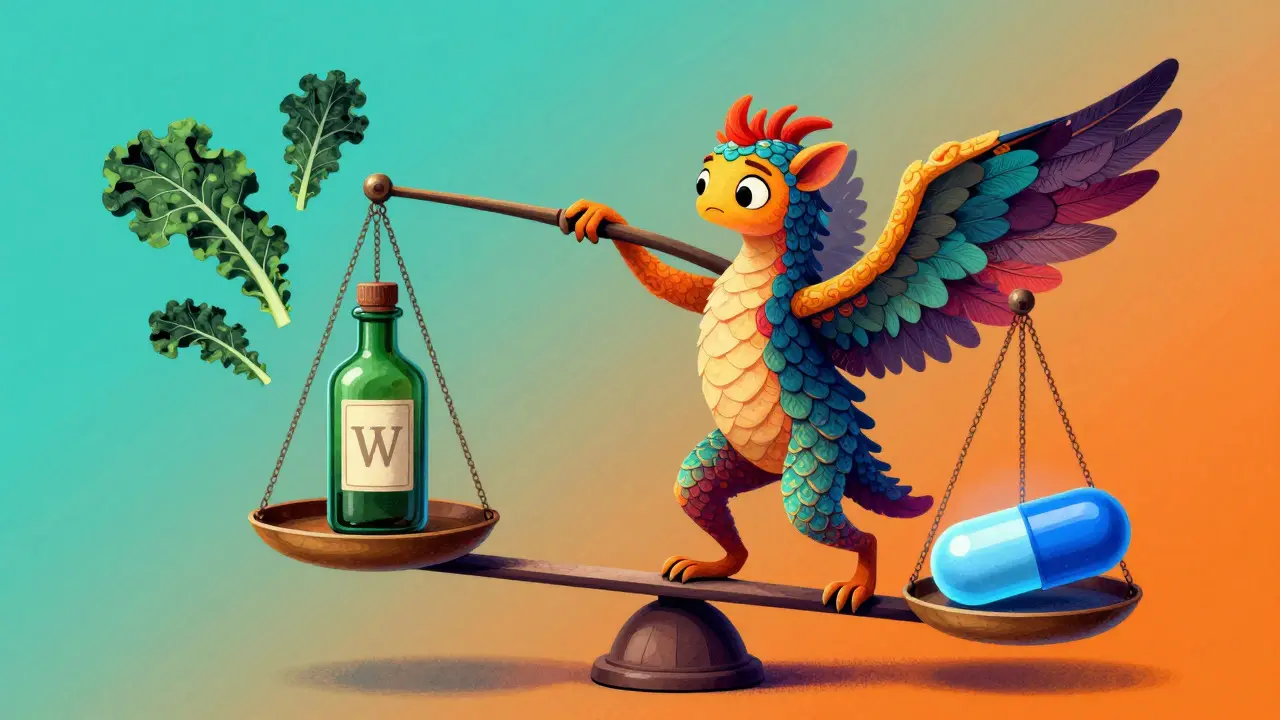
You take a pill to keep your blood from clotting. It sounds simple enough, right? But for millions of people living with atrial fibrillation or recovering from a blood clot, that daily pill is a balancing act between preventing a stroke and risking a dangerous bleed. For decades, Warfarin was the only game in town. Today, it shares the stage with a newer class of drugs known as Direct Oral Anticoagulants (DOACs). The question isn't just which drug works better-it's which one fits your life, your kidneys, and your wallet.
The landscape of blood thinners has shifted dramatically. In 2022, DOACs accounted for 68% of the global anticoagulant market share, valued at $18.7 billion. Why the switch? Because while Warfarin is effective, it demands constant attention. DOACs offer convenience but come with their own set of complexities, particularly when things go wrong. Understanding the difference between these medications-and knowing what happens if you need to reverse them-is critical for patient safety.
How Warfarin Works and Why It’s High-Maintenance
Warfarin is a vitamin K antagonist developed in the 1940s and approved by the FDA in 1954. It doesn’t stop clots directly; instead, it slows down your liver’s ability to make clotting factors II, VII, IX, and X. This process takes time. The onset of action is 24 to 72 hours, and the half-life ranges from 20 to 60 hours. That means if you miss a dose or eat too much kale, the effects linger for days.
This slow, variable response is why Warfarin requires frequent monitoring. You must maintain an International Normalized Ratio (INR) between 2.0 and 3.0. According to the 2022 ORBIT-AF registry, patients on Warfarin undergo a median of 17.8 INR tests per year. That’s nearly one and a half trips to the lab every month. And it’s not just about needles. Warfarin interacts with over 300 medications and is heavily influenced by dietary vitamin K. A sudden change in your salad consumption can push your INR out of range, increasing your risk of bleeding or clotting.
Despite the hassle, Warfarin remains essential for specific groups. If you have a mechanical heart valve, especially a mitral valve, Warfarin is still the standard of care. DOACs are contraindicated here because clinical trials haven’t proven them safe for mechanical valves. Additionally, Warfarin is significantly cheaper-often costing between $4 and $30 per month compared to hundreds for DOACs.
The Rise of DOACs: Convenience Meets Complexity
Direct Oral Anticoagulants (DOACs) represent a technological leap forward. Unlike Warfarin, they target specific clotting factors directly. Dabigatran inhibits thrombin (Factor IIa), while rivaroxaban, apixaban, and edoxaban inhibit Factor Xa. These drugs hit fast. Their onset of action is within 1 to 4 hours, and their half-lives are short, ranging from 5 to 17 hours. This predictability eliminates the need for routine INR monitoring.
The clinical benefits are clear. A 2023 JAMA Network Open study of nearly 18,500 adults found that DOACs reduced the risk of recurrent venous thromboembolism (VTE) by 34% compared to Warfarin. Furthermore, a meta-analysis published in PubMed showed DOACs reduced major bleeding by 17%. Patients love this convenience. A 2023 Mayo Clinic survey revealed that 87% of patients preferred DOACs over Warfarin due to the lack of monitoring requirements.
However, "convenience" comes with caveats. DOACs are cleared by the kidneys. If your kidney function declines, the drug builds up in your system, raising bleeding risks. While Warfarin is safe in severe renal impairment (eGFR <15 mL/min/1.73m²), most DOACs require dose adjustments or avoidance in these cases. Additionally, DOACs cost significantly more. Without insurance, prices range from $300 to $500 per month. For Medicare beneficiaries, 34% report cost-related nonadherence, which can negate the clinical benefits.
| Feature | Warfarin | DOACs (Apixaban, Rivaroxaban, etc.) |
|---|---|---|
| Mechanism | Vitamin K Antagonist | Direct Thrombin or Factor Xa Inhibitor |
| Monitoring | Required (INR) | Routine monitoring not required |
| Onset of Action | 24-72 hours | 1-4 hours |
| Drug Interactions | High (>300) | Low (~40) |
| Cost (Monthly) | $4-$30 | $300-$500 |
| Reversal Agent | Vitamin K, PCC, FFP | Idarucizumab (Dabigatran), Andexanet Alfa (Xa inhibitors) |
When Bleeding Occurs: The Critical Role of Reversal Agents
The biggest fear with any blood thinner is uncontrolled bleeding. If a patient on Warfarin suffers a traumatic injury or gastrointestinal bleed, doctors have established tools to reverse the effect. They administer Vitamin K (5-10mg IV) along with Prothrombin Complex Concentrate (PCC) or Fresh Frozen Plasma (FFP). PCC can normalize INR within 15 to 30 minutes, saving lives in emergency settings.
For years, DOACs lacked specific antidotes. Doctors had to rely on supportive care or off-label use of PCC, which is less effective. That changed with the approval of targeted reversal agents. For dabigatran, there is Idarucizumab (Praxbind®). Approved in 2015, this monoclonal antibody fragment binds to dabigatran immediately. The RE-VERSE AD study showed it achieved sustained reversal in 98.7% of patients with major bleeding. However, it costs approximately $3,400 per vial.
For Factor Xa inhibitors like apixaban and rivaroxaban, the answer is Andexanet Alfa (Andexxa®). Approved in 2018, it acts as a decoy for the anticoagulant. But the cost is steep-around $17,000 per treatment course. This price tag creates a barrier. Only 62% of US hospitals stock idarucizumab, and access to andexanet alfa is even more limited in rural areas. When seconds count during a hemorrhage, the availability of these expensive agents becomes a matter of geography and hospital budget.

Who Should Take Which Drug?
Choosing between Warfarin and a DOAC isn't one-size-fits-all. Current guidelines from the American College of Chest Physicians (ACCP) recommend DOACs as first-line therapy for non-valvular atrial fibrillation and VTE. They are superior in reducing intracranial hemorrhage by 52%, according to a 2023 European Heart Journal review.
However, certain patients stick with Warfarin. Those with mechanical heart valves, antiphospholipid syndrome, or severe renal impairment (eGFR <15) often do better on Warfarin. There is also nuance regarding body weight. Dr. Jack Ansell noted concerns about DOAC efficacy in extreme body weights (<50kg or >120kg) where pharmacokinetic data is limited. In these edge cases, the predictable monitoring of Warfarin might feel safer to clinicians.
For patients with cancer-associated thrombosis (CAT), the tide is turning toward DOACs. The 2023 ASCO guidelines now recommend apixaban or rivaroxaban over low-molecular-weight heparin for most CAT cases, citing better safety profiles and ease of administration.
Future Trends and Emerging Therapies
The field of anticoagulation is evolving rapidly. Researchers are working on universal reversal agents. Ciraparantag is currently in Phase III trials and aims to reverse all types of anticoagulants with a single injection. Imagine a world where any blood thinner can be neutralized instantly without needing to know exactly which drug the patient took. That future may arrive soon.
Newer mechanisms are also being tested. Milvexian, a Factor XIa inhibitor, showed a 46% lower bleeding risk compared to apixaban in early trials. If approved, it could decouple clot prevention from bleeding risk entirely. Meanwhile, lower-dose regimens are becoming standard. Apixaban 2.5mg twice daily is now approved for elderly or frail patients meeting specific criteria, expanding access to those previously deemed too high-risk for anticoagulation.
As we move through 2026, the goal is precision. We are moving away from blanket prescriptions toward personalized anticoagulation strategies that consider genetics, kidney function, lifestyle, and financial constraints. The best drug is the one the patient can take safely, consistently, and affordably.
Are DOACs safer than Warfarin?
Yes, for most patients with non-valvular atrial fibrillation or VTE, DOACs are considered safer. They reduce the risk of intracranial hemorrhage by 52% and major bleeding by 17% compared to Warfarin. However, they carry higher risks in patients with severe kidney disease or extreme body weights.
What should I do if I bleed while on a DOAC?
Seek immediate medical attention. For minor bleeding, pressure and elevation may suffice. For major bleeding, hospitals may use specific reversal agents like Idarucizumab (for dabigatran) or Andexanet Alfa (for apixaban/rivaroxaban). If these are unavailable, Prothrombin Complex Concentrate (PCC) may be used.
Can I eat green vegetables if I am on Warfarin?
Yes, but consistency is key. Vitamin K in greens like spinach and kale counteracts Warfarin. You don't need to avoid them, but you should keep your intake stable week-to-week so your INR remains predictable.
Why are DOACs so expensive?
DOACs are patented medications with complex manufacturing processes. Without insurance, they cost $300-$500 monthly. However, they save money long-term by reducing hospitalizations for bleeding and eliminating lab monitoring costs.
Do DOACs work for mechanical heart valves?
No. DOACs are contraindicated for patients with mechanical heart valves. Warfarin remains the gold standard for these patients due to the high risk of valve thrombosis with other anticoagulants.