SSRI-Anticoagulant Bleeding Risk Calculator
Risk Assessment Tool
This tool helps you understand your bleeding risk when taking both SSRIs and anticoagulants. Based on clinical research with over 42,000 patients.
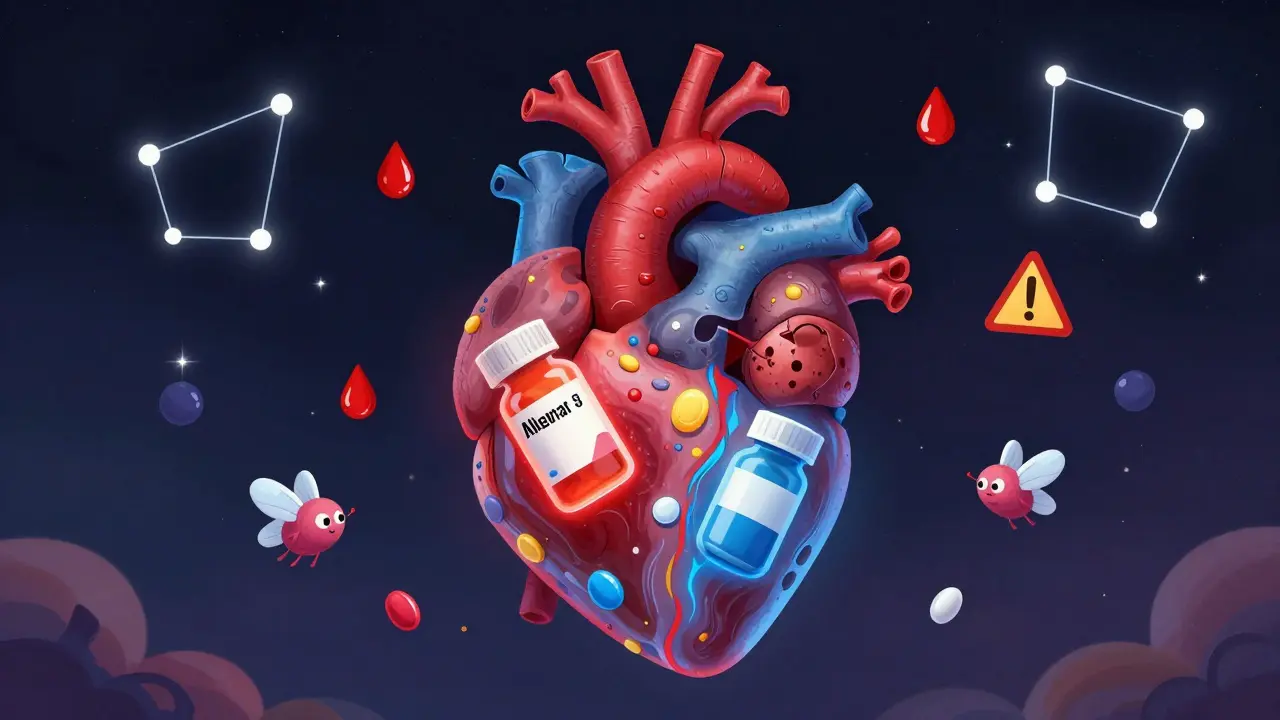
Combining SSRIs with anticoagulants isn’t rare-it’s common. About 38.7% of people on blood thinners who also have depression are prescribed an SSRI. But here’s the problem: this combo can raise your risk of serious bleeding by 33%. That’s not a small number. It’s not theoretical. It’s backed by data from over 42,000 real patients. And the risk isn’t spread evenly-it spikes in the first 30 days.
Why SSRIs Make Blood Thinners More Dangerous
SSRIs don’t thin your blood the way aspirin or warfarin do. Instead, they mess with your platelets. Platelets are the tiny cells in your blood that rush to a cut and stick together to stop bleeding. They need serotonin-not the kind in your brain, but the kind stored inside platelets-to work properly. SSRIs block the transporter that pulls serotonin back into platelets. Over time, platelets run out of serotonin. Without it, they can’t clump together effectively. Studies show this cuts platelet aggregation by 30-40%. That means even a small bump or bruise can turn into a bigger bleed. This isn’t a guess. It’s been measured in lab tests using platelet function assays. The effect happens fast-within days of starting the SSRI-and lasts as long as you’re taking it.Where the Bleeding Happens
Not all bleeding is the same. The most common site? Your gut. About 58% of major bleeding events in people taking both an SSRI and a blood thinner happen in the stomach or intestines. That’s why unexplained nausea, black stools, or dizziness after standing up could be warning signs. Intracranial bleeding-bleeding in the brain-makes up 17% of cases. That’s scary, but less common. The rest show up as muscle bleeds, nosebleeds, or bleeding after minor surgery. The numbers tell the story: if you’re only on an anticoagulant, your risk of major bleeding is about 1.8 events per 100 people each year. Add an SSRI, and that jumps to 2.4. That’s six extra bleeding events per 1,000 people every year. For someone already at risk-older, with high blood pressure, or on multiple meds-that’s a real danger.Warfarin vs. DOACs: Not All Blood Thinners Are Equal
If you’re on warfarin, the risk is higher than if you’re on a DOAC like apixaban or rivaroxaban. The 2024 JAMA study found warfarin combined with SSRIs raised bleeding risk by 28%, while DOACs raised it by 22%. That difference sounds small, but in real terms, it means more hospital visits, more transfusions, more complications. Why? Warfarin’s effect is harder to control. Its dose needs constant monitoring with INR blood tests. SSRIs can interfere with how your liver breaks down warfarin, making levels spike unpredictably. DOACs don’t rely on the same liver pathways, so the interaction is cleaner. Still, even DOACs aren’t risk-free when paired with SSRIs. The platelet effect is the same no matter what blood thinner you’re on.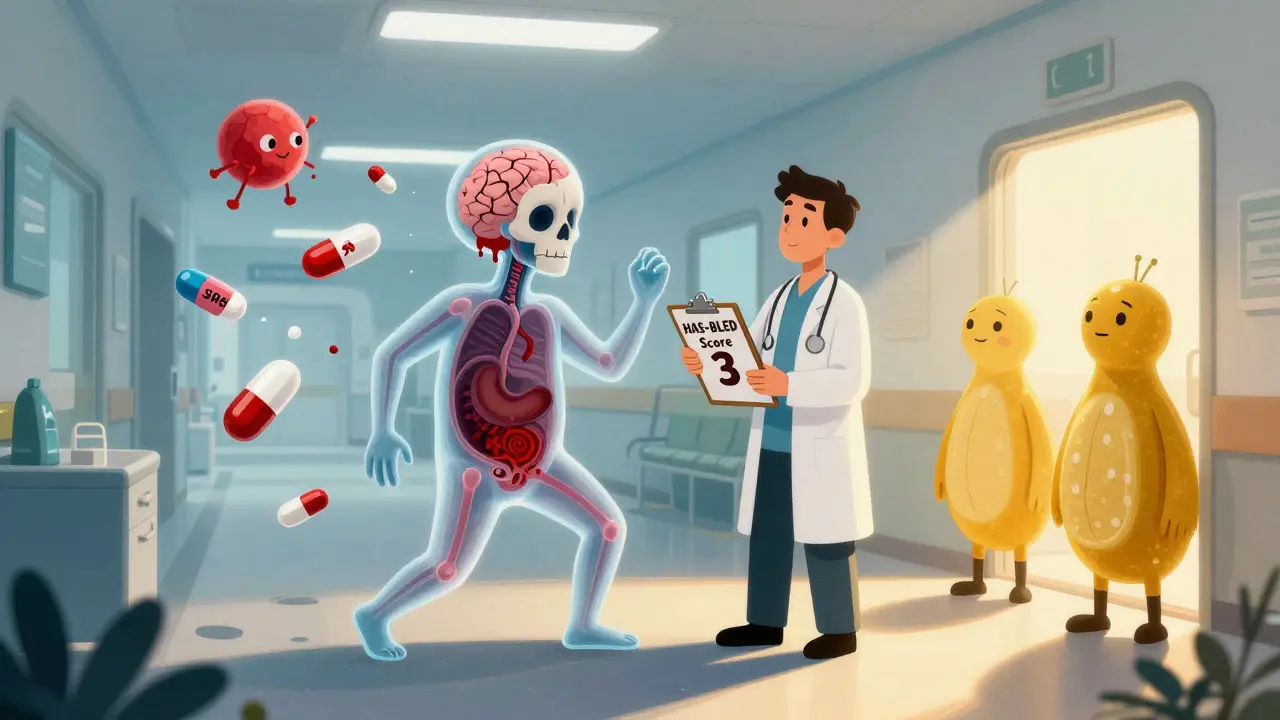
Are Some SSRIs Safer Than Others?
You might think the strongest SSRI-like paroxetine-would be the most dangerous. Or maybe the weakest, like escitalopram, would be safer. But that’s not what the data says. In the largest study to date, paroxetine and escitalopram carried the same bleeding risk: a 33% increase. Sertraline, the most commonly prescribed SSRI in this group, showed the same pattern. This flips old assumptions. Earlier studies suggested some SSRIs might be safer, but those were smaller and didn’t control for all variables. The 2024 study looked at over 42,000 bleeding events. It’s the most reliable data we have. The bottom line: it’s not about which SSRI you pick-it’s about the fact that all of them affect platelets the same way.Who’s Most at Risk?
Not everyone on this combo will bleed. But some people are far more vulnerable. If your HAS-BLED score is 3 or higher, you’re in the high-risk group. That score adds up points for things like high blood pressure, kidney disease, older age, previous bleeding, or being on other drugs like aspirin or NSAIDs. If you’re over 75, have a history of ulcers, or take steroids, your risk jumps again. Primary care doctors miss this interaction more often than you’d think. A 2022 audit found 68% of unsafe SSRI-anticoagulant combinations happened in family medicine clinics. Why? Because depression is treated in short visits. Blood thinners are managed by cardiologists. The overlap gets lost.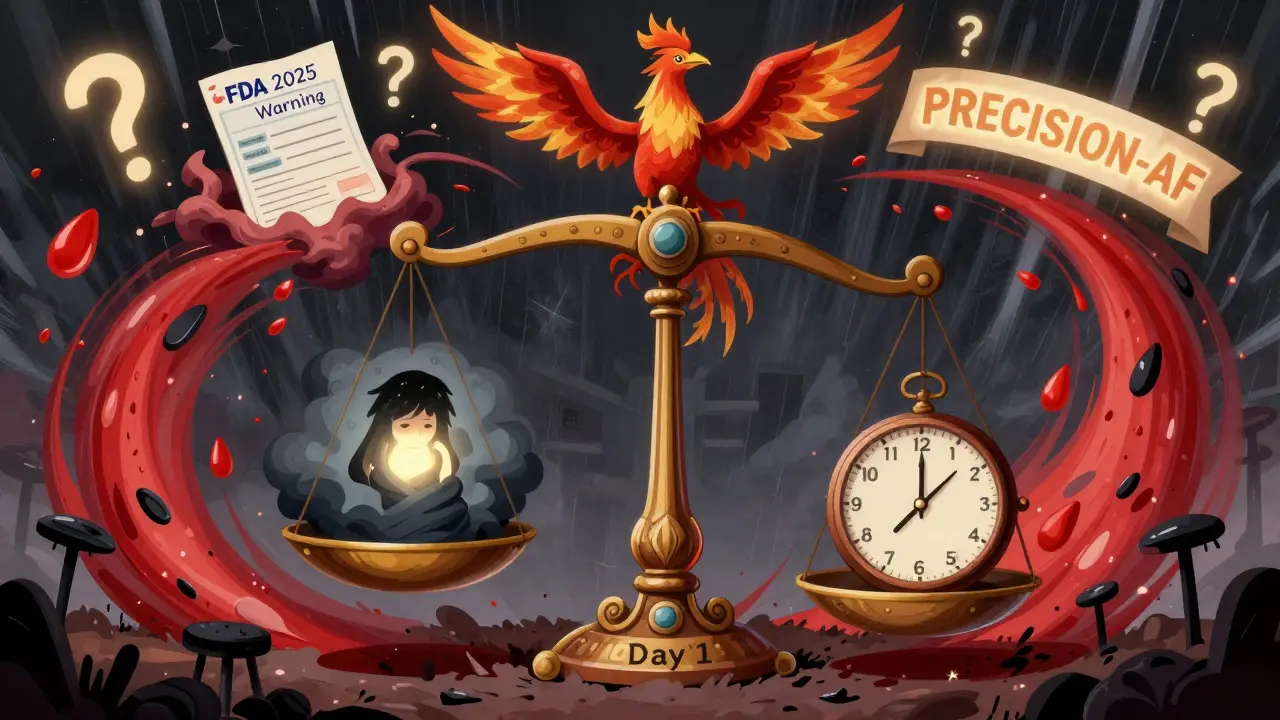
What Should You Do?
If you’re on an anticoagulant and your doctor suggests an SSRI, ask: Is there a safer alternative? Mirtazapine and bupropion don’t affect platelets. They’re not first-line for everyone, but they’re good options if you’re at high risk for bleeding. If you must take an SSRI, don’t stop it suddenly-depression can worsen, and that’s dangerous too. Monitoring matters. Your doctor should check your hemoglobin and do a stool test for hidden blood at the start, then again at one and three months. If you’re on warfarin, INR checks should be twice a week for the first month. Watch for signs: unusual bruising, red or dark urine, persistent headaches, vomiting blood, or sudden weakness on one side of your body.The Bigger Picture
This isn’t just about one drug combo. It’s about how we treat people with multiple chronic conditions. Atrial fibrillation and depression often go together. One in five people with AFib also has depression. We can’t ignore either. But we also can’t treat them in isolation. The American Heart Association, FDA, and European Heart Rhythm Association all agree: this interaction is real. It’s not a scare tactic. It’s a signal to be smarter. The FDA updated its medication guides in January 2025 to include specific warnings. The NIH is funding a major trial-PRECISION-AF-that will compare SSRIs to non-SSRI antidepressants in 5,000 patients. Results come in late 2026. Meanwhile, hospitals are starting to build clinical decision tools that flag this interaction automatically when a doctor prescribes an SSRI to someone on a blood thinner. That’s progress.Bottom Line
You don’t need to avoid SSRIs if you’re on a blood thinner. But you do need to know the risk. It’s highest in the first month. It’s higher with warfarin. It’s real, even with DOACs. And it’s preventable with awareness, monitoring, and sometimes, a different antidepressant. If you’re taking both, talk to your doctor. Ask about your bleeding risk score. Ask if your SSRI is the best choice. Ask what signs to watch for. Don’t assume it’s safe because your doctor didn’t mention it. This interaction is common enough that it should be part of every conversation about blood thinners and depression.Can SSRIs cause bleeding on their own without anticoagulants?
SSRIs alone rarely cause major bleeding in healthy people. The risk is very low-less than 1 in 1,000 per year. But in people with other risk factors-like ulcers, older age, or taking NSAIDs-the risk increases. The real danger comes when SSRIs are combined with anticoagulants or antiplatelet drugs like aspirin. The platelet effect from SSRIs is mild on its own, but it becomes dangerous when the blood is already slow to clot.
Is it safe to take aspirin with an SSRI and anticoagulant?
No. Taking aspirin with both an SSRI and an anticoagulant triples your bleeding risk. Aspirin also affects platelets, so you’re stacking three different mechanisms that all slow clotting. This combination is considered high-risk and should only be used if absolutely necessary-like after a heart stent-and then only under close supervision. Most guidelines recommend avoiding this combo entirely unless there’s a life-saving reason.
Do all SSRIs affect platelets the same way?
Yes. While SSRIs vary in how strongly they block serotonin reuptake in the brain, they all block it in platelets the same way. Paroxetine, fluoxetine, sertraline, and escitalopram all reduce platelet serotonin by about 90% at normal doses. Studies show no meaningful difference in bleeding risk between them. The idea that some SSRIs are "safer" for bleeding is a myth based on outdated assumptions.
How long does the increased bleeding risk last?
The highest risk is in the first 30 days after starting the SSRI. After that, the risk drops by about half and stays steady. It doesn’t go away completely-because platelet serotonin stays low as long as you take the SSRI-but it becomes more predictable. That’s why the first month is critical for monitoring. If you’ve been on both for six months without a bleed, your risk is much lower, but not zero.
Should I stop my SSRI if I’m going to have surgery?
Don’t stop it without talking to your doctor. Stopping an SSRI suddenly can cause withdrawal symptoms or make depression worse, which is dangerous too. For minor procedures, you usually don’t need to stop. For major surgery, your surgeon and psychiatrist should work together. Sometimes, they’ll switch you to a non-SSRI antidepressant temporarily, or delay surgery to stabilize your mood. Never make this decision alone.
Are there any antidepressants that don’t increase bleeding risk?
Yes. Mirtazapine and bupropion don’t affect platelet serotonin and are considered safer alternatives. Venlafaxine (an SNRI) has a small effect on platelets, but less than SSRIs. Tricyclic antidepressants like amitriptyline also carry some bleeding risk, so they’re not ideal. For people at high risk of bleeding, mirtazapine is often the best choice because it’s effective for depression and doesn’t interfere with clotting.
How do I know if I’m having a bleeding episode?
Watch for these signs: unexplained bruising, red or dark stools, blood in urine, vomiting blood or material that looks like coffee grounds, sudden severe headache, dizziness, confusion, weakness on one side, or unusual fatigue. Even if you think it’s minor, report it. Bleeding can start quietly and get worse fast. Don’t wait until you feel faint.
Sally Denham-Vaughan
January 1, 2026 AT 17:18Man, I’ve been on citalopram for years and just found out my warfarin dose got bumped last month. No one ever mentioned this combo could be a ticking time bomb. I’ve had two weird nosebleeds in the last month-thought it was dry air. Guess I’m scheduling a blood check this week.
Paul Ong
January 2, 2026 AT 07:54Just read this and my heart dropped. My dad’s on apixaban and started sertraline last month. He’s 82. No one warned us. I’m calling his doctor first thing tomorrow
Donna Peplinskie
January 2, 2026 AT 08:42This is so important-and so rarely discussed. I’m a nurse in a geriatric clinic, and I’ve seen three patients bleed out from this exact combo. One guy just had a GI bleed after starting fluoxetine for his grief. The docs were shocked. But we should’ve seen it coming. We need better alerts in the EHR. Please, if you’re on blood thinners, ask your prescriber about platelets. Not just about depression.
Todd Nickel
January 2, 2026 AT 19:40It’s fascinating how the mechanism is so consistent across SSRIs-even though we treat them as if they’re pharmacologically distinct in terms of efficacy or side effects. The platelet serotonin transporter (SERT) is identical in every SSRI’s binding profile, regardless of CNS selectivity. That’s why escitalopram and paroxetine show no difference in bleeding risk. The brain’s serotonin system is a red herring here. It’s all about peripheral platelet depletion. We’ve been misattributing risk based on CNS potency when the real action is in the bloodstream. This isn’t a drug issue-it’s a systems biology oversight.
Liam George
January 3, 2026 AT 18:18They’re hiding something. Why is this only getting attention now? Big Pharma knew about the platelet effect since the 90s. They buried the data because SSRIs were too profitable. Look at the timing-the FDA warning came right after the patent cliffs on DOACs. Coincidence? I don’t think so. The real danger isn’t the combo-it’s the silence. They want you scared enough to switch to their new ‘safer’ drug, not to question why this was ever approved.
Austin Mac-Anabraba
January 5, 2026 AT 09:34Let’s be clear: this isn’t a medical issue-it’s a failure of reductionist thinking. We treat depression as a neurotransmitter imbalance and anticoagulation as a coagulation cascade. We don’t see the organism. We don’t see the platelet as a living cell with a serotonin economy. We don’t see that a drug that alters mood also alters hemostasis. We’ve turned medicine into a checklist. You have depression? SSRI. You have AFib? Anticoagulant. We don’t ask how the two systems talk to each other. We don’t care. And now people are bleeding out because we refused to think holistically.
Richard Thomas
January 6, 2026 AT 14:35I’ve been on sertraline for 7 years and rivaroxaban for 3. Never had a bleed. But I’ve had three minor bruises that took weeks to fade. I thought I was just clumsy. Now I realize those were early signals. I’ve started checking my stool every morning. I’ve stopped taking ibuprofen. I’m going to ask my psychiatrist about mirtazapine. I don’t want to wait until something worse happens. This post didn’t scare me-it made me responsible.
sharad vyas
January 7, 2026 AT 17:01In India, many people take fluoxetine with warfarin because it’s cheap and available. Doctors don’t always know this risk. My uncle had a stroke and then got depressed. He was given fluoxetine without warning. He bled into his stomach. We didn’t know why. Now I tell everyone I know: if you take blood thinner, ask about the antidepressant. Not all doctors care. But you must care for yourself.
Ann Romine
January 9, 2026 AT 14:52Just read this and thought of my mom. She’s on apixaban, had a stroke last year. Started escitalopram for anxiety. She’s been having weird dizziness after standing. I didn’t connect it. I’m going to call her cardiologist. This is the kind of info that should be on every prescription label. Not buried in a 10-page PDF.
Kristen Russell
January 11, 2026 AT 08:48Don’t panic. But do act. If you’re on both, get your hemoglobin checked. Skip the NSAIDs. Watch for dark stools. And if your doctor says ‘it’s fine,’ ask them to show you the data. You deserve to know the real numbers. You’re not being paranoid-you’re being smart.
Layla Anna
January 12, 2026 AT 05:14Thank you for this. I’ve been on sertraline and Xarelto for 2 years. I thought my bruising was just from yoga. I’m going to ask about mirtazapine next week. Also, I’m printing this out to give to my grandma. She’s on warfarin and just started fluoxetine 😭
Andy Heinlein
January 12, 2026 AT 14:46Just shared this with my whole family. My cousin’s on warfarin and started Lexapro last month. She didn’t know. I’m so glad I saw this. We’re all gonna check our meds now. You’re a lifesaver