
Heartburn Risk Estimator
Your Factors
NSAIDs, Beta-blockers, Anticholinergics, Bisphosphonates, Theophylline.
Risk Assessment
Imagine biting into a perfectly seasoned chili con carne. The heat hits your tongue, but instead of pleasure, you feel a burning sensation creeping up your chest. You reach for your heartburn medication, only to realize it’s not working as well as it used to. This isn’t just bad luck-it’s likely a clash between the spicy foods that contain capsaicin, which relaxes the lower esophageal sphincter and allows stomach acid to escape into the esophagus and the medications you take for other conditions.
Heartburn, clinically known as gastroesophageal reflux disease (GERD), affects roughly 20% of American adults weekly. While we often blame diet alone, many common drugs quietly contribute to the problem. When you combine spicy meals with GI-irritating medications, you create a perfect storm for discomfort. Understanding this interaction is the first step toward reclaiming your comfort without giving up every meal you love.
The Science Behind the Burn
To manage heartburn, you need to understand what’s happening inside your body. The key player here is the lower esophageal sphincter (LES). Think of the LES as a valve at the bottom of your throat that opens to let food pass into your stomach and then closes tightly to keep stomach acid where it belongs. When this valve doesn’t close properly, acid escapes upward, causing that familiar burning pain.
Spicy foods interfere with this mechanism through capsaicin, the active compound in chili peppers that relaxes the lower esophageal sphincter muscle, reducing its pressure by 30-40% in sensitive individuals within 30 minutes. Dr. David Johnson from Eastern Virginia Medical School notes that this relaxation happens quickly after consumption. Meanwhile, certain medications work against you in two ways: they either increase stomach acid production or further relax the LES. When you eat spicy food while taking these drugs, you’re essentially double-down on the factors that cause reflux.
However, the relationship isn’t always black and white. Dr. Anish Sheth from Yale University points out that individual variability is significant. For some, even mild spices trigger severe symptoms; for others, hot sauce is harmless. The National Institutes of Health (NIH) recently noted a lack of sufficient evidence to universally forbid spicy foods for GERD patients. This means your personal tolerance matters more than general guidelines.
Medications That Worsen Heartburn
Many people don’t realize their daily prescriptions could be fueling their heartburn. If you take any of the following, you need to be extra cautious with spicy meals:
- NSAIDs: Nonsteroidal anti-inflammatory drugs like ibuprofen and aspirin can cause erosive esophagitis in 15-30% of regular users. They irritate the lining of the esophagus directly.
- Beta-blockers: Used for hypertension, these are associated with a 22% increased risk of GERD according to the Framingham Heart Study update.
- Anticholinergics: Often prescribed for seasickness or overactive bladder, these decrease LES pressure by 25% in nearly 70% of users.
- Bisphosphonates: Commonly used for osteoporosis, these can cause esophagitis in 15-30% of users if not taken correctly.
- Theophylline: An asthma medication that relaxes the LES by 28%, making reflux more likely.
Dr. Gary W. Falk warns that chronic use of NSAIDs increases GERD risk by 40-60%. If you rely on these drugs for pain management, pairing them with a spicy dinner is asking for trouble. Always check with your doctor about alternatives if heartburn becomes frequent.
Why Your Heartburn Meds Might Fail
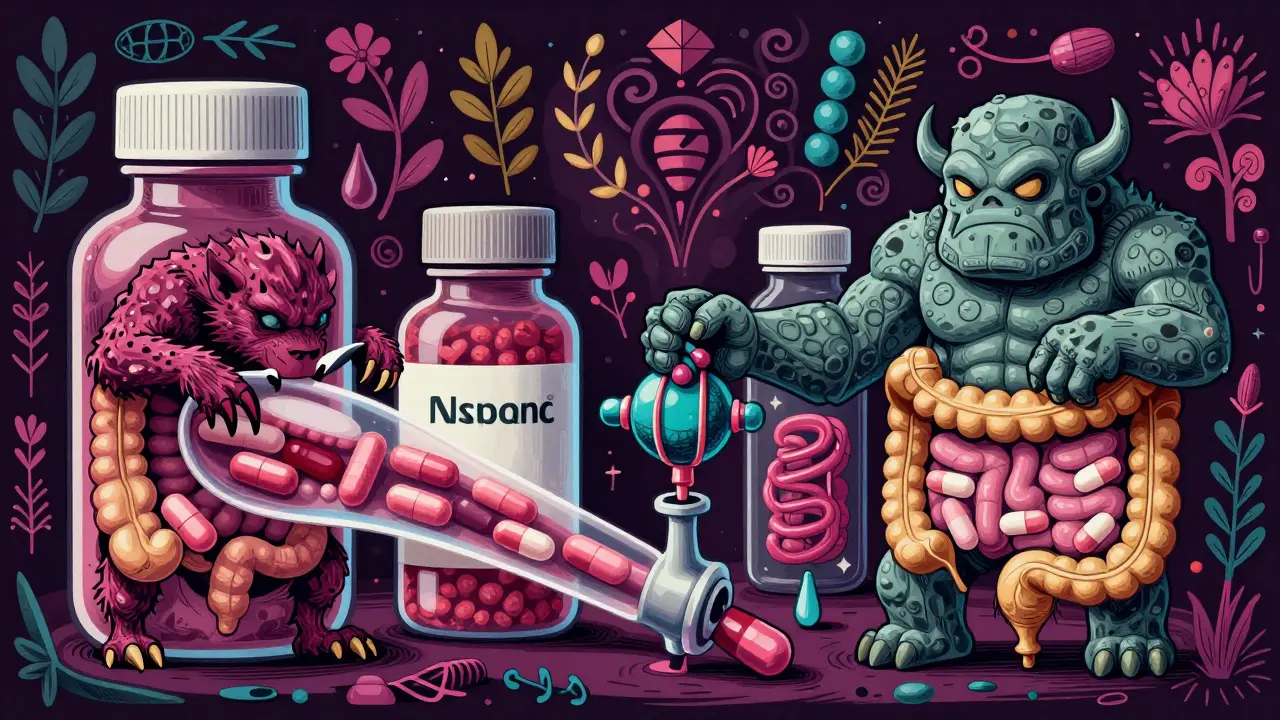
You might be doing everything right-taking your medication-but still suffering. Why? Timing and food interactions play a huge role. Proton pump inhibitors (PPIs) like pantoprazole, a widely prescribed proton pump inhibitor that reduces stomach acid production but has reduced efficacy when consumed alongside spicy, fatty, or acidic foods, are less effective if you eat trigger foods shortly after taking them. Studies show absorption rates drop by 18-23% when PPIs are taken within two hours of consuming spicy or fatty meals.
Antacids offer immediate relief but have short durations. Rolaids, containing calcium carbonate and magnesium hydroxide, provides symptom relief within 2-5 minutes but lasts only 30-60 minutes. This makes them useful for emergency relief after a spicy meal, but not for long-term control. H2 blockers like famotidine take longer to kick in (30-60 minutes) but provide 12-hour relief, making them better for planned meals.
A critical mistake many make is taking antacids simultaneously with other medications. Aluminum-containing antacids can reduce the absorption of tetracycline antibiotics by 50% and fluoroquinolones by 30-90%. The Cleveland Clinic advises taking antacids one hour before or four hours after other drugs to prevent these dangerous interactions.
| Type | Onset Time | Duration | Best Use Case |
|---|---|---|---|
| Antacids (e.g., Rolaids) | 2-5 minutes | 30-60 minutes | Immediate post-meal relief |
| H2 Blockers (e.g., Famotidine) | 30-60 minutes | 12 hours | Pre-planned meals |
| PPIs (e.g., Pantoprazole) | 2-3 days for full effect | 24 hours | Chronic acid suppression |
Practical Steps to Reduce Risk
You don’t have to eliminate all spice from your life forever. Instead, adopt a strategic approach. Start with a 3-7 day elimination period for suspected trigger foods. Then, gradually reintroduce them to identify your personal sensitivities. Dr. Philip O. Katz suggests that blanket prohibitions lack scientific foundation, so personalized testing is key.
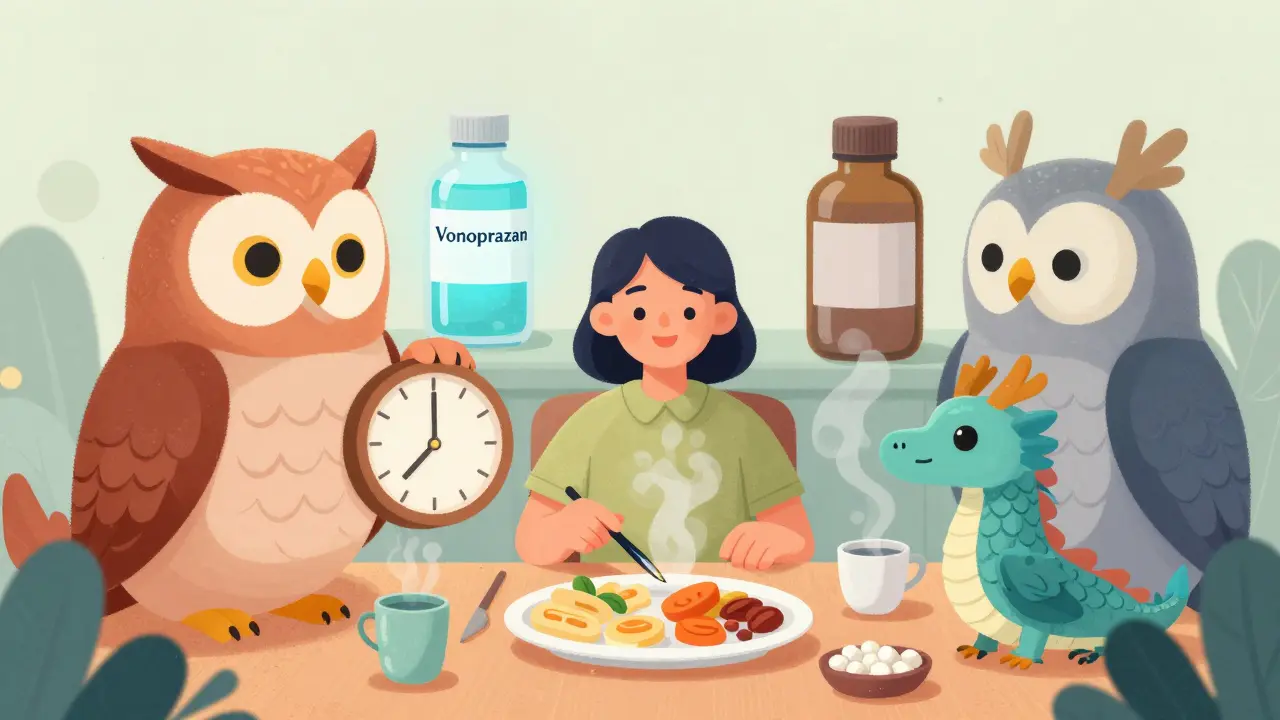
Timing is everything. Take PPIs 30-60 minutes before your first meal of the day for optimal effectiveness. Avoid lying down for three hours after eating, which reduces nocturnal reflux by 60%. Elevate the head of your bed by 6-8 inches to use gravity to your advantage. Keep a food-symptom diary; tracking for just two weeks can predict your triggers with 90% accuracy.
If you must eat spicy food, pair it with non-trigger sides. Avoid combining spicy dishes with alcohol, caffeine, or fatty foods, as these compounds also relax the LES. Stay upright after meals, and consider chewing sugar-free gum to stimulate saliva production, which helps neutralize acid.
New Developments in Treatment
The landscape of GERD treatment is evolving. In August 2023, the FDA approved Vonoprazan, a potassium-competitive acid blocker that achieves more consistent acid suppression than traditional PPIs, with 89% of patients achieving symptom control regardless of genetic metabolism differences. This new drug addresses a key limitation of PPIs, which vary in effectiveness based on individual liver enzymes.
Research at Johns Hopkins University showed promising results for capsaicin desensitization protocols. In a 12-week trial, 65% of participants successfully increased their spicy food tolerance without worsening symptoms. This suggests that gradual exposure might help retrain your digestive system’s response to spice.
Personalized nutrition is growing rapidly. Advances in microbiome testing allow doctors to tailor dietary advice based on your unique gut bacteria. This shift away from one-size-fits-all restrictions offers hope for those who want to enjoy diverse cuisines without constant discomfort.
Can I eat spicy food if I take pantoprazole?
Yes, but timing matters. Taking pantoprazole within two hours of eating spicy food can reduce its absorption by 18-23%. For best results, take your PPI 30-60 minutes before breakfast and avoid highly spicy meals immediately after dosing. Monitor your symptoms closely.
Which medications are most likely to cause heartburn?
NSAIDs (like ibuprofen and aspirin), beta-blockers, anticholinergics, bisphosphonates, and theophylline are among the most common culprits. These drugs either irritate the esophagus directly or relax the lower esophageal sphincter, allowing acid to reflux.
How long does antacid relief last after a spicy meal?
Antacids like Rolaids provide quick relief within 2-5 minutes but typically last only 30-60 minutes. Because spicy foods can continue irritating the esophagus, you may experience symptom recurrence once the antacid wears off. They are best used for occasional, immediate relief rather than long-term management.
Is it true that everyone reacts differently to spicy foods?
Absolutely. Research shows significant inter-individual variability in capsaicin sensitivity. Some people experience severe heartburn from mild spices, while others tolerate very hot foods without issue. Personal trigger identification through a food diary is more effective than following generic dietary restrictions.
What is Vonoprazan and how is it different from PPIs?
Vonoprazan is a newer class of drug called a potassium-competitive acid blocker. Unlike PPIs, which depend on specific liver enzymes for activation, Vonoprazan works consistently across different genetic profiles. Clinical trials show 89% of patients achieve symptom control, making it a promising option for those who don’t respond well to traditional PPIs.
Prudence Wesson
May 4, 2026 AT 07:40Oh, please. The average person doesn't need a medical degree to know that eating fireballs while taking painkillers is a terrible idea. It is not rocket science, it is basic common sense which seems to be in short supply these days. You are treating adults like children who cannot figure out cause and effect. The sphincter relaxes because the body is reacting to irritants, not because some new study just discovered it yesterday. People should stop blaming their medications for their own poor dietary choices. It is frankly embarrassing how much detail is provided for such an obvious interaction. One would think you never heard of ibuprofen before. The NIH did not need to conduct a study to tell us that spicy food burns. It burns. That is what spice does. Do not waste your time reading this if you have functioning brain cells.
Divya Patel
May 6, 2026 AT 01:54In my culture, we understand that heat is not merely a sensation but a transformative energy that must be respected. When one consumes chili, one is engaging in a ritual of endurance and vitality. To view it solely as a mechanical failure of the esophageal valve is to miss the deeper spiritual connection between the eater and the ingredient. However, I agree that balance is key. The ancient Ayurvedic texts warn against combining certain substances without proper timing. We do not rush the digestion; we honor it. Perhaps modern medicine could learn from the patience inherent in traditional practices. The body knows when it is ready. We simply need to listen rather than suppress with pills.
SWATI NAWANGE
May 7, 2026 AT 14:48I must confess that I find this article rather pedestrian in its approach to a complex physiological issue. The notion that capsaicin merely 'relaxes' the LES is a gross oversimplification of the intricate neuro-gastrointestinal interplay at work here. One does not simply 'eat' spicy food; one curates an experience that requires a sophisticated understanding of one's own metabolic idiosyncrasies. If you are suffering from heartburn, perhaps you lack the refined palate necessary to appreciate true culinary artistry without resorting to pharmaceutical crutches. It is tragic, really. The masses consume mediocrity and then blame the ingredients for their discomfort. True elegance lies in restraint and knowledge, neither of which seem prevalent in this discussion.
nikki paurillo
May 8, 2026 AT 02:55There is a vibrant tapestry of flavors that we often ignore when we fear the burn. Spice is not an enemy; it is a passionate lover that demands respect and careful handling. I have found that by embracing the warmth of the chili, I have learned more about my own body’s rhythms than any pill ever taught me. It is about finding the sweet spot where the heat dances on the tongue without setting the chest ablaze. This journey into personal tolerance is deeply philosophical. We are not just digesting food; we are integrating experiences. Let us not shy away from the fire, but learn to walk through it with grace and awareness.
Tallulah Sandison
May 8, 2026 AT 20:29hey guys! i totally get this stuff now. so basically dont eat spicy stuff right after meds? got it. simple fix! no need to overcomplicate things. just wait a bit or skip the hot sauce. easy peasy!
Ken Baldridge
May 10, 2026 AT 16:55Look, folks, let's break this down with some serious gastroenterological jargon to make sure we're all on the same page regarding pathophysiology. The lower esophageal sphincter tone is critically modulated by transient relaxation events, which are exacerbated by both pharmacological agents and dietary triggers like capsaicin. It's not just about 'pain'; it's about the biomechanical integrity of the anti-reflux barrier. When you introduce NSAIDs, you're compromising the mucosal defense mechanisms, leading to erosive esophagitis. So, yeah, take your PPIs correctly-30 minutes before breakfast-and don't undermine the pharmacokinetics with immediate caloric intake. It's all about optimizing the therapeutic index, y'all. Stay hydrated and keep that LES tight!
Bradley Gusick
May 11, 2026 AT 08:05This is exactly what they want you to believe. Big Pharma wants you dependent on Vonoprazan because they know the truth about our water supply and the chemicals in our soil that weaken our natural defenses. They are manipulating the narrative to sell you more drugs while ignoring the real conspiracy: the government is poisoning us with fluoride and GMOs that destroy our gut lining. I don't trust the NIH or Yale. They are part of the globalist agenda to control our bodies through medication compliance. Wake up sheeple! Eat raw meat and avoid processed foods, and you won't need these fake medicines. They are testing us.
Leah Sentz
May 13, 2026 AT 04:19Ugh, why does everything have to be so complicated?? 😡 I just want to eat my tacos without feeling like I'm going to die!! 🤮 It's not fair that my body hates fun things. I hate doctors who tell me to change my diet. They just want to control me. 😤 Why can't I have nice things?? My heart hurts every time I see a menu. 😭 It's so unfair. I wish I could just swallow a pill and forget all this nonsense. Life is hard enough without burning chests. 😒
Robert Cowley
May 14, 2026 AT 13:39Actually, the premise of this entire article is fundamentally flawed. You are assuming that correlation implies causation. Just because someone eats spicy food and takes aspirin doesn't mean the aspirin caused the heartburn. Maybe they were stressed. Maybe they ate too fast. The data is cherry-picked to support a narrative that benefits the supplement industry. I bet half the people commenting here haven't even read the full text. It's all hype. Don't fall for it. The 'science' is bogus. (¬_¬)
Sarah Mifsud
May 16, 2026 AT 01:21i think this is really helpful info! thanks for sharing. i always forgot to wait before taking my pills. gonna try the gum trick next time i have spicy food. hope it works for everyone else too! :)
Christina Lancey
May 16, 2026 AT 12:16You can do this! Small changes lead to big improvements. Remember to be kind to yourself as you navigate these dietary adjustments. Everyone has different tolerances, and that is okay. Take it one meal at a time.
Halle Dagley
May 17, 2026 AT 20:38It is imperative that American citizens adhere strictly to these guidelines. Our health is a reflection of our national discipline. Those who ignore medical advice due to cultural preferences are undermining the collective well-being of the nation. We must prioritize safety over fleeting pleasures. The government provides these resources for a reason. Compliance is mandatory for a strong society. Do not deviate from the prescribed protocols. Your health is your duty to the country.
Rebekah Korak
May 19, 2026 AT 19:05Let us delve into the existential dread of the burning chest, shall we? It is not merely acid reflux; it is the universe reminding us of our mortality. Every time you reach for that antacid, you are acknowledging your fragility. The capsaicin is a metaphor for life's harsh truths-it enters warmly but leaves a lasting sting. Most people are too afraid to confront the void within their own stomachs, so they numb themselves with pantoprazole. But what is the point? We are all just bags of acid waiting to spill over. The sphincter is a gatekeeper of our sanity. When it fails, we are exposed to the raw chaos of existence. Stop trying to control it. Embrace the burn. It is the only thing that feels real anymore. The doctors are liars. The food is truth. Choose wisely, or choose nothing at all.