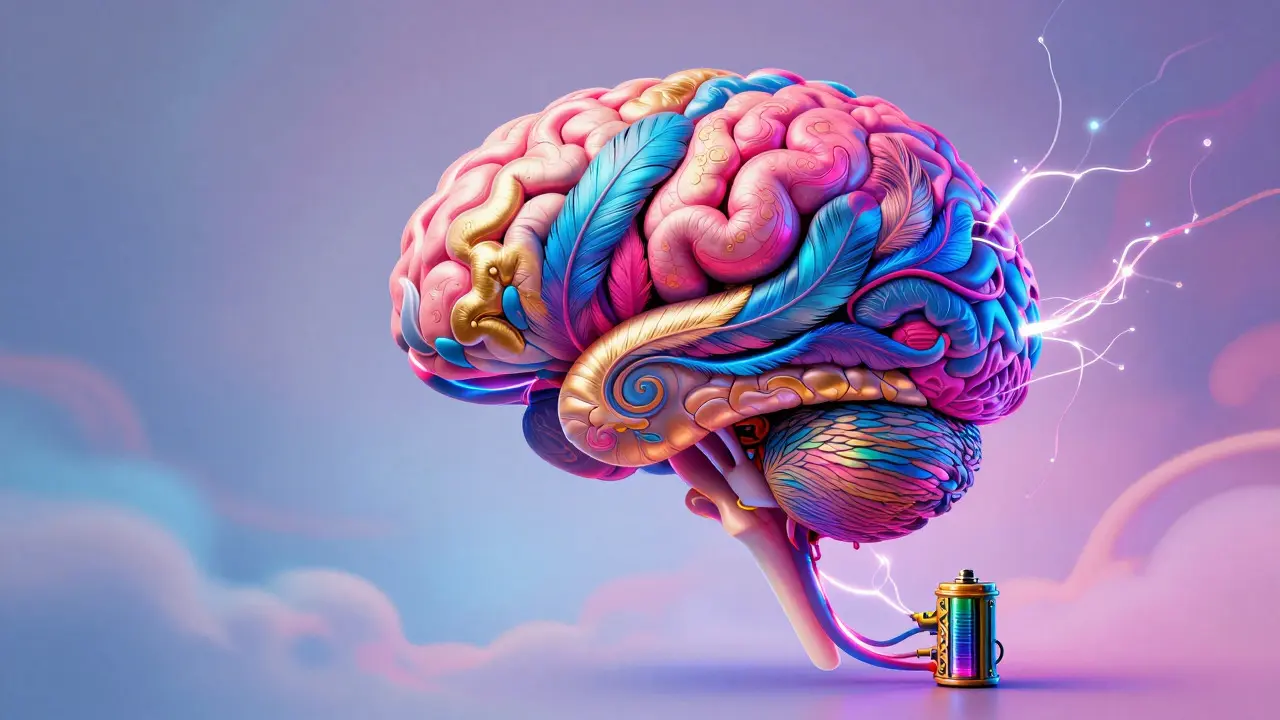
Imagine living with Parkinson’s disease where your body freezes at the worst possible moments, or uncontrollable movements make simple tasks like drinking coffee impossible. For many patients, medication stops working reliably after a few years. This is where Deep Brain Stimulation (DBS) comes in. It is not a cure, but it is one of the most effective tools we have to restore control over movement. However, getting the surgery approved is tricky. Not everyone qualifies, and selecting the right candidate is critical for success.
If you or a loved one are considering this route, understanding who makes a good candidate is just as important as understanding the technology itself. The difference between a life-changing outcome and a disappointing one often lies in the screening process. Let’s break down what DBS actually does, who should consider it, and how doctors decide if it’s the right move.
What Is Deep Brain Stimulation (DBS)?
Deep Brain Stimulation is a surgical treatment that involves implanting electrodes into specific areas of the brain. Think of it as a pacemaker for your brain. Instead of correcting heart rhythm, it modulates abnormal electrical signals that cause motor symptoms in Parkinson’s disease.
The system has three main parts:
- Leads: Thin wires placed in the brain targets.
- Extension wires: Insulated wires running under the skin from the head to the chest.
- Implantable Pulse Generator (IPG): A battery-powered device, usually placed near the collarbone, that sends electrical impulses to the leads.
Modern systems, like Medtronic Percept PC or Boston Scientific Vercise Genus, are sophisticated. They can be rechargeable, last up to 15 years, and even sense brain activity to adjust stimulation automatically. The goal isn’t to stop the disease progression-no treatment does that yet-but to manage the symptoms that medications can no longer handle effectively.
Who Is the Ideal Candidate?
This is the most critical part. DBS works wonders for some people and fails for others. The key predictor of success is how well you respond to levodopa medication. If pills help your movement, DBS will likely help too. If pills don’t help, neither will the surgery.
Here are the standard criteria used by neurologists and neurosurgeons:
- Idiopathic Parkinson’s Disease: You must have a confirmed diagnosis of typical PD. Conditions like Multiple System Atrophy (MSA) or Progressive Supranuclear Palsy (PSP) rarely respond to DBS.
- Motor Fluctuations: You experience "off" periods where medication wears off quickly, causing stiffness or freezing.
- Dyskinesias: You have involuntary, writhing movements caused by high doses of medication.
- Levodopa Responsiveness: You show at least a 30% improvement in motor scores when taking levodopa during an "on" period compared to an "off" period.
- No Significant Cognitive Impairment: Memory loss or dementia can worsen after surgery. Doctors typically require a Mini-Mental State Examination (MMSE) score above 24 or a MoCA score above 21.
- Disease Duration: Historically, patients needed to have had PD for at least 5 years. However, recent trials like EARLYSTIM suggest benefits may appear earlier, around 3-4 years, for selected patients.
If you have severe depression, uncontrolled psychiatric issues, or significant balance problems that don’t improve with medication, you might not be a good fit. These non-motor symptoms are less responsive to DBS.
Surgical Targets: STN vs. GPi
Once you’re cleared for surgery, the next big decision is where to place the electrodes. There are two primary targets in the brain: the Subthalamic Nucleus (STN) and the Globus Pallidus interna (GPi). Both work, but they have different trade-offs.
| Feature | Subthalamic Nucleus (STN) | Globus Pallidus Interna (GPi) |
|---|---|---|
| Medication Reduction | High (30-50% reduction possible) | Moderate (Less reduction) |
| Dyskinesia Control | Good (via med reduction) | Excellent (Direct suppression) |
| Cognitive Side Effects | Higher risk (Word-finding issues, impulsivity) | Lower risk |
| Battery Life | Shorter (Higher energy use) | Longer (Lower energy use) |
| Best For | Patients wanting to cut meds significantly | Patients with severe dyskinesias or mild cognitive concerns |
Choosing between them depends on your specific symptoms. If your biggest struggle is the side effects of high-dose medication, STN might be better because it allows you to lower those doses. If your main issue is uncontrollable dancing-like movements (dyskinesia) and you want to keep your current medication routine, GPi is often preferred.
The Evaluation Process
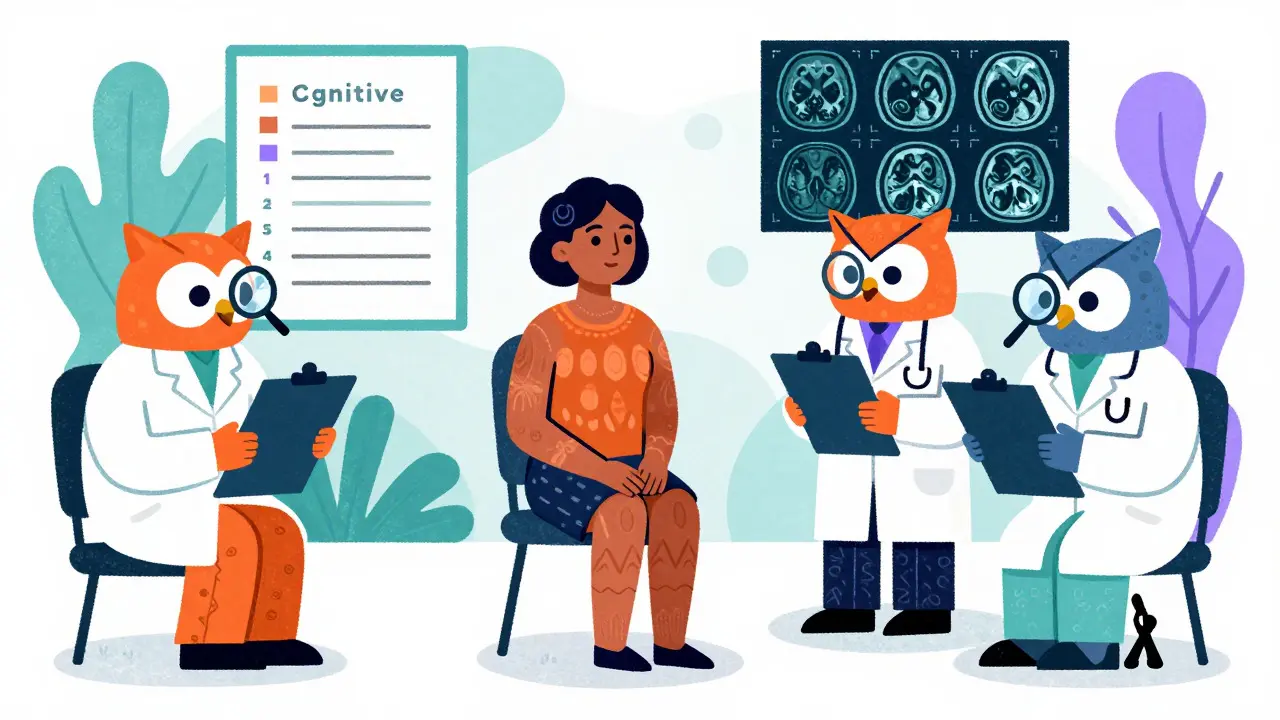
Getting DBS isn’t a quick fix. It requires a rigorous evaluation that can take 3 to 6 months. This process ensures you are truly a candidate and helps set realistic expectations.
First, you’ll meet with a movement disorder specialist. They will observe you in both "on" and "off" states to measure your response to medication. Next, you’ll undergo neuropsychological testing. This takes several hours and assesses memory, attention, and executive function. It’s crucial because undetected cognitive decline can lead to post-surgical confusion or worsening behavior.
You’ll also need high-resolution MRI scans (usually 3 Tesla) to map your brain anatomy precisely. Finally, a multidisciplinary team-including neurologists, neurosurgeons, and neuropsychologists-reviews your case. They discuss risks, benefits, and whether unilateral (one side) or bilateral (both sides) stimulation is appropriate.
Risks and Realistic Expectations
Like any brain surgery, DBS carries risks. While rare, complications can include:
- Intracranial Hemorrhage: Bleeding in the brain occurs in about 1-3% of cases.
- Infection: Hardware infections happen in 2-5% of patients, sometimes requiring removal of the device.
- Lead Migration: The electrode moves slightly, changing the stimulation effect.
- Cognitive Changes: Some patients report word-finding difficulties or slower processing speed, especially with STN stimulation.
It’s vital to understand that DBS does not stop Parkinson’s from progressing. It treats the motor symptoms that respond to levodopa. Symptoms like speech difficulty, swallowing issues, and balance problems often do not improve much with DBS. Many patients enter surgery hoping for a "reset button," only to find their non-motor symptoms remain unchanged. Managing these expectations is half the battle.

Life After Implantation
The surgery is just the beginning. The first 6 to 12 months involve frequent programming visits. Your doctor adjusts the voltage, frequency, and pulse width to find the sweet spot where symptoms are controlled without side effects like tingling or muscle contractions.
You’ll need to learn how to live with the device. Most modern implants are MRI-conditional, meaning you can get MRIs under strict conditions. You’ll avoid strong magnetic fields and keep security wands away from your chest. If you have a rechargeable battery, you’ll spend 30-45 minutes every few days charging it. Non-rechargeable batteries last 3-5 years and require minor surgery to replace.
Many patients report a dramatic improvement in quality of life. In the EARLYSTIM trial, 78% of patients reported meaningful improvements. OFF time drops significantly, and dyskinesias vanish. But it requires commitment. You still need to take medication, exercise, and attend follow-ups.
Future Directions
The field is evolving rapidly. Closed-loop DBS systems, which sense brain activity and adjust stimulation in real-time, are becoming available. Early data suggests they offer better symptom control with fewer side effects than traditional constant stimulation. Researchers are also looking at genetic markers, like LRRK2 mutations, to predict who will benefit most. As technology improves, we may see DBS offered earlier in the disease course, potentially delaying disability for more patients.
How long does the DBS battery last?
Non-rechargeable batteries typically last 3 to 5 years, depending on the stimulation settings. Rechargeable batteries, found in newer models like the Medtronic Percept PC, can last 9 to 15 years with regular charging.
Does DBS cure Parkinson’s disease?
No, DBS does not cure Parkinson’s disease. It manages motor symptoms such as tremors, rigidity, and bradykinesia. It does not stop the underlying neurodegeneration or treat non-motor symptoms like dementia or autonomic dysfunction.
Can I get an MRI after DBS surgery?
Yes, most modern DBS systems are MRI-conditional. This means you can safely undergo MRI scans if specific protocols are followed, such as turning off the device and using compatible machine settings. Always inform radiologists about your implant before any scan.
What are the common side effects of DBS?
Common side effects include paresthesia (tingling sensations), muscle contractions, speech difficulties, and mood changes. These are often managed by adjusting the stimulation parameters during programming visits. Surgical risks include infection, bleeding, and hardware failure.
How much does DBS cost?
In the United States, the total cost ranges from $50,000 to $100,000, including surgery, hospital stay, and the device. Insurance coverage varies; Medicare covers DBS for Parkinson’s disease, but prior authorization is required. Costs in Europe and other regions differ based on national healthcare systems.