
You probably wouldn't dream of hiding a prescription medication from your doctor, but when it comes to a daily multivitamin or a bottle of herbal tea, many of us keep it to ourselves. We tend to think of "natural" as "safe," but that's a dangerous assumption. Whether it's a high-dose fish oil for your heart or a St. John's Wort capsule for your mood, these products change your body's chemistry. If your healthcare provider doesn't know they're in your system, they can't accurately predict how your prescriptions will work-or if they'll cause a life-threatening reaction.
The problem is that most of us aren't asked about these products. Research shows that while nearly 90% of people disclose their prescriptions, only about 36% mention their supplements. This gap isn't just a clerical error; it's a safety risk. In 2022 alone, the Food and Drug Administration (FDA) documented over 1,000 adverse event reports linked to supplements, including several deaths. When you don't share your over-the-counter medications and supplement list, you're essentially leaving a giant piece of the puzzle missing from your medical history.
Why Your 'Natural' Routine Needs a Paper Trail
It's a common misconception that if a product is sold on a store shelf without a prescription, it isn't "medicine." However, there is a massive regulatory difference between a drug and a supplement. The Dietary Supplement Health and Education Act (DSHEA) of 1994 created a framework where supplements don't require the same pre-market approval as prescription drugs. This means the FDA doesn't vet them for safety and efficacy before they hit the market; they mostly react after people report problems.
Because of this, your doctor can't rely on a general understanding of a supplement's safety. For example, some botanical products like kava or comfrey can cause severe liver damage when mixed with certain meds. Even something as common as green tea extract has been linked to liver failure when combined with acetaminophen. When you share your use accurately, you allow your provider to screen for these specific risks using tools like the Epic Systems Corporation EHR, which is increasingly integrating AI to flag these interactions automatically.
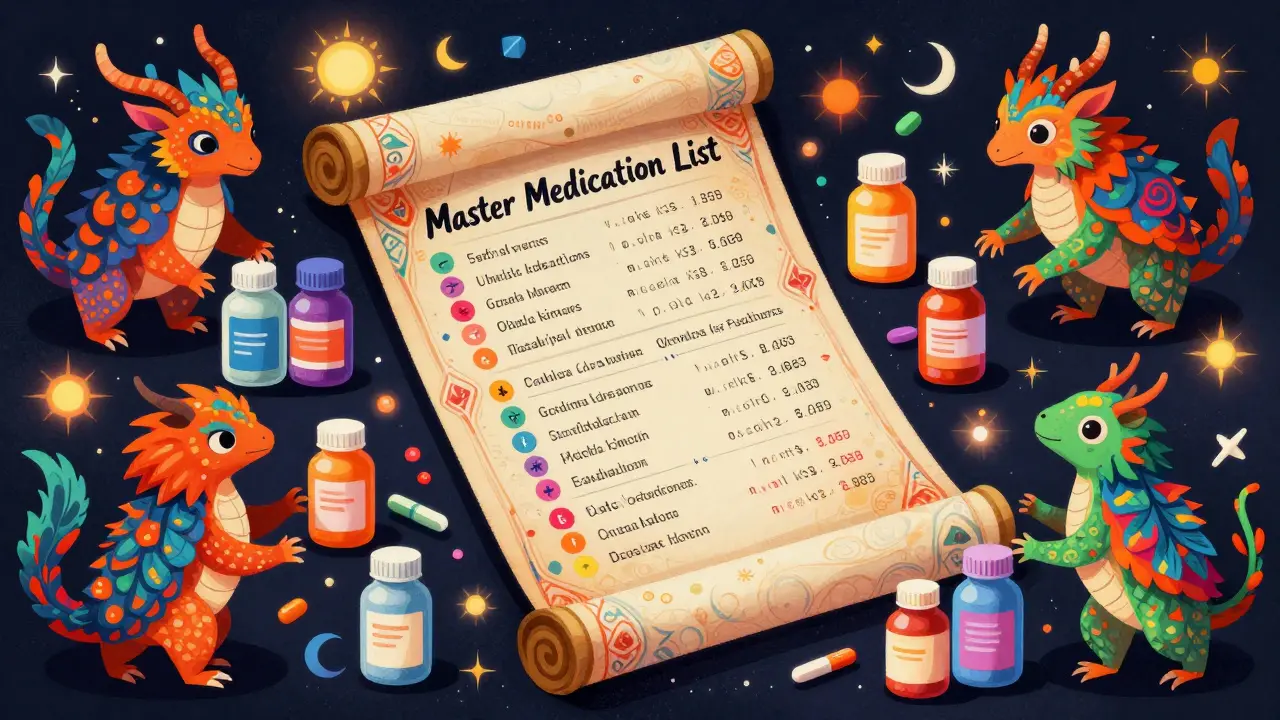
Building Your Master Medication List
Walking into an appointment and trying to remember every pill you took in the last month is a recipe for mistakes. Memory fails, and it's easy to forget that "daily" vitamin you take every other day. The best way to ensure accuracy is to move from verbal reporting to a written record. Studies have shown that written lists can reduce documentation errors by as much as 64%.
To do this right, don't just write "Vitamin C." That doesn't tell your doctor enough. You need to follow a specific protocol to provide the data they actually need to make a clinical decision. Use a dedicated form, such as the one provided by the National Institutes of Health Office of Dietary Supplements (NIH ODS), and include these four critical details for every single item:
- Exact Product Name: List the brand and the specific name on the bottle. Ingredients can vary wildly between brands.
- Precise Dosage: Instead of "one pill," write "500mg Vitamin C." This is vital because supplements have no legal limit on serving sizes.
- Frequency: Be specific. "Twice daily with meals" is much more helpful than "regularly."
- Purpose: Why are you taking it? Whether it's for "osteoporosis prevention" or "better sleep," this helps your doctor see if the supplement is treating a symptom that might actually be a side effect of another drug.
| Feature | Drug Facts Label (OTC) | Supplement Facts Label |
|---|---|---|
| Regulation | FDA regulated as drugs | Regulated under DSHEA |
| Ingredient Listing | Lists therapeutic dose of active ingredients | Lists ingredients by weight |
| Approval | Must meet safety/efficacy standards | No pre-market FDA approval required |
| Example | Ibuprofen, Cough Syrup | Omega-3, Magnesium, Elderberry |
Navigating the Conversation with Your Provider
Even with a list in hand, some people hesitate to bring it up. You might fear your doctor will judge you for taking "unproven" supplements, or you might simply assume they don't need to know if it's just a mineral. In reality, pharmacists are often the best resource for this. Because of their deep training in pharmacology, pharmacists have been found to identify over three times more potential interactions during medication reviews than physicians do.
When you're in the exam room, don't wait for the doctor to ask. Over half of patients who don't disclose their supplements say it's because the practitioner simply didn't ask. Take ownership of the conversation. A simple phrase like, "I've put together a complete list of every supplement and OTC medicine I'm taking-can we review these to make sure they don't interfere with my new prescription?" signals to your provider that you are proactive about your safety.
Be especially vigilant when starting a new medication. If you are on a blood thinner like warfarin, for instance, taking high doses of fish oil can increase your bleeding risk. If you're taking antidepressants, St. John's Wort can alter your metabolism and make the prescription less effective. These aren't just "possible" risks; they are documented clinical dangers that can be avoided with a five-minute conversation.

Common Pitfalls to Avoid
One of the biggest mistakes is believing that "natural" equals "safe." Many patients don't even consider vitamins or minerals to be "supplements" that require discussion. This is a major gap in care. Any substance that has a physiological effect on your body-even a "natural" herbal extract-needs to be on your list.
Another trap is relying on the label's claims. While the FDA mandates that Current Good Manufacturing Practices (cGMPs) should ensure labels are accurate, a Government Accountability Office report found that nearly 23% of supplement labels contained inaccurate ingredient listings. This is why bringing the actual bottle to your appointment is often better than just writing down what you think is in it. Your doctor can see the exact brand and formulation.
Why is it important to list the brand name of my supplement?
Different brands often use different fillers, concentrations, and sourcing for the same ingredient. Because dietary supplements aren't pre-approved by the FDA, the purity and potency can vary significantly between manufacturers. Your doctor needs the exact brand to check for known contamination issues or specific formulation risks.
Do I need to report vitamins that are part of my regular food?
No, you don't need to list the nutrients in your diet. However, you should report any fortified foods if you're consuming them in extreme quantities, and you definitely need to report any concentrated vitamin or mineral supplements, even if they are just "standard" multivitamins.
What should I do if my doctor says supplements are a waste of time?
Regardless of whether your doctor believes in the efficacy of a supplement, they must know you are taking it for safety reasons. Focus the conversation on "drug interactions" rather than "benefits." Your goal is safety, not a debate on nutrition.
How often should I update my medication and supplement list?
You should update your list every time you start or stop a product. At a minimum, review and update your written record before every single healthcare appointment, including visits to specialists or the dentist.
Can't my doctor just check my pharmacy records?
No. Pharmacy records only show prescriptions. Since OTC medications and supplements are bought over the counter, there is no centralized database that tracks them. You are the only reliable source for this information.
Next Steps for a Safer Health Plan
If you're not sure where to start, take 10 minutes this evening to clear out your medicine cabinet. Gather every bottle, tin, and blister pack you use. If you use a specific health app or a digital tracker, print that out, but double-check it against the actual labels. If you have a complex regimen, consider scheduling a brief "medication therapy management" session with your pharmacist-these sessions are specifically designed to catch the kind of overlaps that a standard 15-minute doctor's visit might miss.
Trey Kauffman
April 12, 2026 AT 19:47Oh, wonderful. Another reminder that theFDA is basically a giant suggestion box and we're all just lab rats for the supplement industry until someone actually dies. Truly a pinnacle of modern healthcare.
Danny Wilks
April 14, 2026 AT 11:13It is quite fascinating how the societal perception of 'natural' has evolved into a blanket synonym for 'harmless,' even though the pharmacological reality is that many botanical compounds possess incredibly potent bioactivity that can drastically alter the efficacy of synthetic drugs. I have always found that the quiet patience of a pharmacist, who actually has the time to cross-reference these interactions, provides a much more comprehensive safety net than the rushed environment of a primary care physician's office.
Ben hogan
April 14, 2026 AT 22:49Imagine thinking a list solves the systemic failure of the medical industrial complex. This is such an elementary approach to a complex failure of regulation. Pathetic.
Kelly DeVries
April 15, 2026 AT 16:54honestly i just love how some people think they can self diagnose with a bottle of elderberry and not tell their doctor then act surprised when things go south lol just be real with your docs guys
Suchita Jain
April 17, 2026 AT 14:52It is imperative that one recognizes the gravity of this negligence. To omit such vital information from your physician is not merely a mistake but a profound lack of discipline regarding your own physical wellbeing. One must maintain an impeccable record of all ingestibles to ensure the sanctity of the clinical process.
Robin Walton
April 18, 2026 AT 12:20I really appreciate the reminder to be proactive. It can be a bit intimidating to bring up things we aren't sure about, but it's all about staying safe.
Simon Stockdale
April 20, 2026 AT 12:10LISTEN UP because this is how we keep AMERICA healthy and strong by actually following the rules and not letting some random overseas supplement company trick us into taking junk that doesnt work and messes up our meds which is just a total disaster waiting to happen if you aint careful with your health!!
kalpana Nepal
April 22, 2026 AT 02:42Nature is truth. But we must be strong in our own land. This is just basic sense.
Thabo Leshoro
April 22, 2026 AT 08:44This is so important... the pharmacokinetics of these supplements can really mess with the CYP450 enzyme system... which changes how your body metabolizes the main drug... very dangerous!!!
Lynn Bowen
April 23, 2026 AT 14:04I've noticed that in different cultures, the reliance on herbal remedies is much higher, and this gap in communication is a universal challenge in global health settings.