Why Expiration Dates on Medication Matter
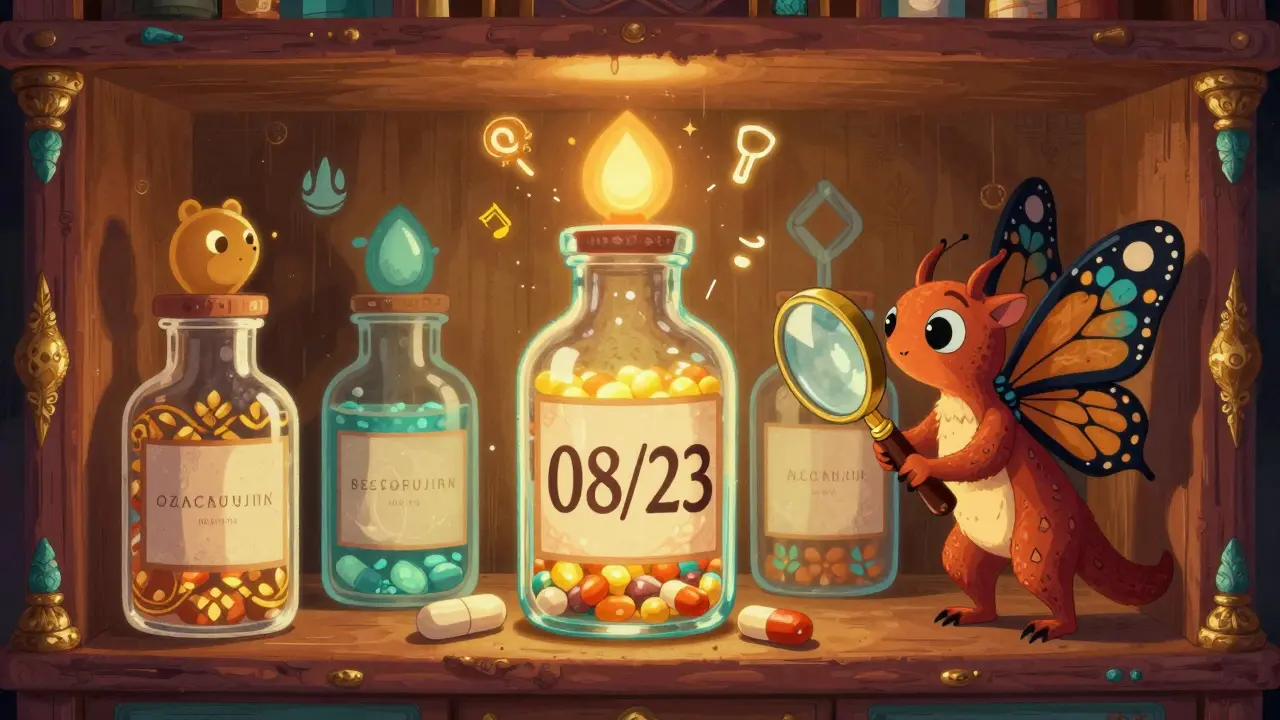
You open your medicine cabinet and find an old bottle of ibuprofen. The label says 08/23. Is it still safe? Can you take it? Or should you toss it? These aren’t just casual questions-they’re safety decisions that affect how well your medicine works, or if it could even hurt you.
Expiration dates aren’t arbitrary. They’re the last day the manufacturer guarantees the drug will work as intended and stay safe to use, assuming it’s been stored properly. The U.S. Food and Drug Administration (FDA) requires this date on every prescription and over-the-counter medicine since 1979. It’s not a "use-by" date like milk-it’s a science-backed deadline based on stability testing. The drug’s chemical structure, strength, and purity are monitored under heat, humidity, and light to see how long it holds up.
But here’s the catch: many people think expired medicine is instantly dangerous. That’s not always true. In fact, the FDA’s own Shelf Life Extension Program found that 90% of tested drugs remained effective years past their expiration date-when stored in ideal, sealed conditions. But that doesn’t mean you should take every old pill you find. Some medications lose potency fast. Others become risky. Knowing the difference saves money and prevents harm.
How Expiration Dates Are Shown on Packaging
Expiration dates don’t look the same everywhere. You’ll see them written in different formats depending on where the medicine was made or sold.
- In the U.S., you’ll most often see MM/YY (like 08/23) or MM/DD/YYYY (like 08/15/2023).
- In the European Union and the UK, it’s usually DD/MM/YYYY (15/08/2023).
- In China and some other countries, it’s YYYY/MM/DD (2023/08/15).
If you only see a month and year-say, 08/23-it means the medicine expires on the last day of August 2023. So if today is December 15, 2025, that bottle is long past its date.
Look for the words: Expires, Expiry, Exp, Use by, or Use before. These all mean the same thing. If you see Manufactured on or Lot No., that’s not the expiration date. Those are for tracking recalls, not safety.
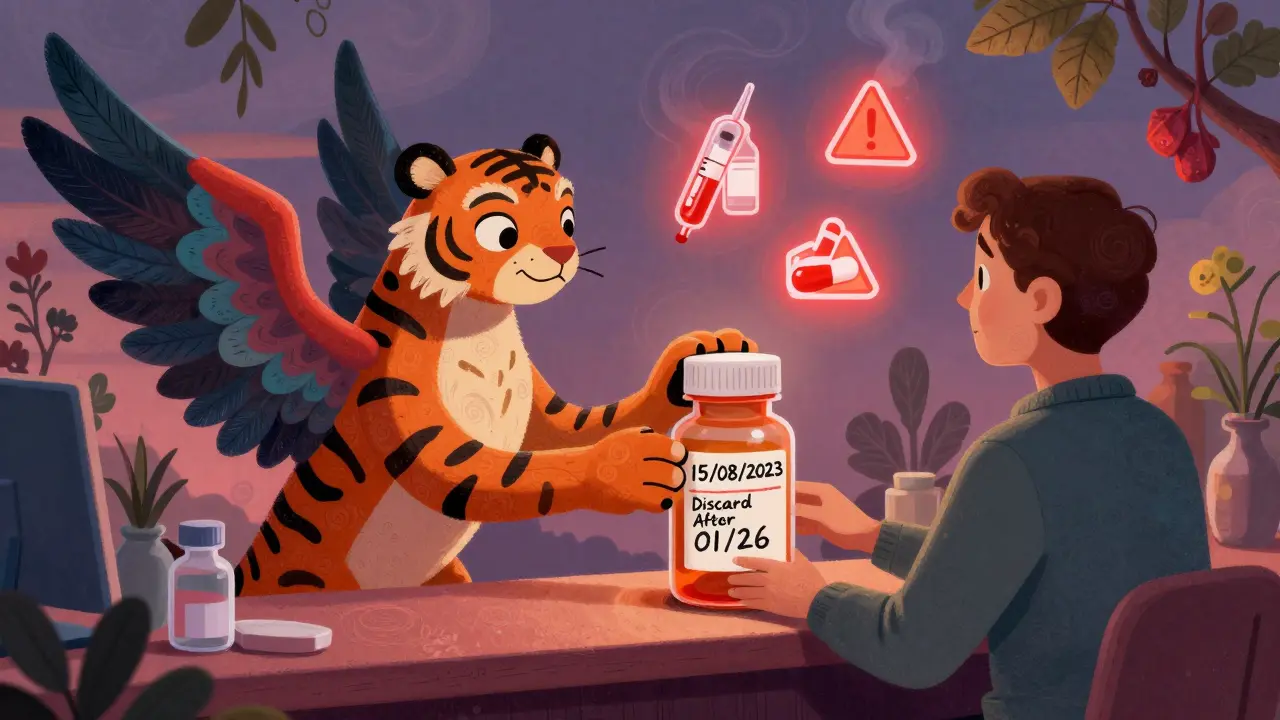
Don’t rely on the pharmacy label alone. When you pick up a prescription, the pharmacist often puts a new label on the bottle with a discard after date. That’s usually one year from when you got it-even if the original bottle says it lasts until 2027. Why? Because once you open the bottle, expose it to air, moisture, or light, it degrades faster. Always check both labels.
Which Medications Are Dangerous After Expiration
Most pills and capsules are just less effective after their expiration date. But a few can become unsafe. Never take these past their date:
- Insulin - It can lose potency quickly. Using weak insulin means your blood sugar stays dangerously high.
- Birth control pills - Even a small drop in hormone levels can lead to unintended pregnancy.
- Thyroid medications - If the dose drops, you could develop fatigue, weight gain, or heart problems.
- Anti-platelet drugs like aspirin or clopidogrel - If they don’t work, you’re at higher risk of heart attack or stroke.
- Antibiotics - They may not kill all the bacteria. That doesn’t just mean you feel worse-it can lead to antibiotic-resistant infections.
- Eyedrops - These are especially prone to bacterial growth after opening. Using contaminated drops can cause eye infections.
Even if the pill looks fine, don’t risk it. These aren’t medications you can afford to guess with.
As for tetracycline-the old antibiotic that once caused kidney damage when expired-that risk came from outdated manufacturing. Modern versions don’t have this issue. But that’s the only documented case of a drug becoming toxic after expiration. Still, the rule stands: when in doubt, skip it.
What Happens When Medicine Expires
Expired medicine doesn’t turn into poison overnight. It slowly breaks down. The active ingredients degrade. The chemical balance shifts. The result? Less power.
For pain relievers like ibuprofen or acetaminophen, you might notice they don’t work as well after a year or two. That’s not dangerous-it’s just ineffective. But for antibiotics, that reduced strength is a public health threat. If a dose isn’t strong enough to kill all bacteria, the survivors multiply and evolve into superbugs.
Some medications, especially liquids, syrups, or eye drops, can grow mold or bacteria after the expiration date-even if they look clear. Preservatives wear off. Containers get contaminated when you touch them with dirty fingers.
And here’s something most people don’t realize: storage matters more than you think. If you keep your medicine in the bathroom, near the sink or shower, heat and moisture are killing it faster than the expiration date. Sunlight on a windowsill? That’s another killer. Medicines that need refrigeration-like insulin or some antibiotics-lose potency if left at room temperature for too long.
That’s why the FDA recommends checking for changes: Is the pill cracked? Discolored? Smells weird? Has the liquid turned cloudy or formed particles? If yes, toss it-even if the date hasn’t passed yet.
How to Store Medicines to Make Them Last
Your medicine’s expiration date only means something if it was stored right. Manufacturers test stability under ideal conditions: cool, dry, dark, sealed. Most homes don’t meet that standard.
- Don’t store pills in the bathroom. Humidity from showers breaks them down faster.
- Keep them in a cool, dry place. A bedroom drawer or kitchen cabinet away from the stove is better.
- Use original containers. Don’t transfer pills to pill organizers unless you’re using them daily. The original bottle protects from light and moisture.
- Follow refrigeration instructions. If it says "refrigerate," keep it in the fridge-not the door, where temperatures swing. Use a small insulated container if you’re traveling.
- Keep away from kids and pets. Lock cabinets if needed.
And here’s a pro tip: write the date you opened the bottle on the label. For example, if you opened a bottle of amoxicillin on March 1, 2025, and the pharmacist said "discard after 14 days," mark it with a Sharpie. That way, you won’t forget.
What to Do With Expired Medicine
Never flush pills down the toilet or throw them in the trash without mixing them with something unappealing. That’s how pets, kids, or even wildlife get into them.
Here’s the safest way:
- Take expired medicine to a pharmacy drop-off bin. Many pharmacies, including Walgreens and CVS, have free take-back programs.
- If no drop-off is nearby, mix pills with coffee grounds, cat litter, or dirt. Put them in a sealed bag and throw them in the trash.
- Remove or scratch out personal info on the label before tossing the bottle.
- Never give expired medicine to someone else-even if it’s for the same condition.
Some communities hold annual drug take-back days. Check with your local pharmacy or health department. In the UK, the NHS encourages returning unused or expired meds to pharmacies for safe disposal.
How to Avoid Confusion With Pharmacy Labels
One of the biggest mistakes people make? Trusting the pharmacy label over the manufacturer’s original date.
Pharmacies put on a "discard after" date-usually one year from when you picked it up. That’s not the same as the drug’s real expiration. For example, your insulin might expire in 2027, but the pharmacy says "discard after 01/26." That’s because once you open the vial, it starts degrading faster.
Ask your pharmacist: "Is this the manufacturer’s expiration date, or your pharmacy’s beyond-use date?" If they don’t know, they’re not giving you full information. You have the right to know both.
Some pharmacies now offer digital reminders. Ask if they can text or email you when your meds are about to expire. If not, set your own alerts on your phone. Apps like MedSafe or MyTherapy let you scan barcodes and track expiration dates automatically.
What to Do If You Accidentally Take Expired Medicine
If you took one expired pill-especially something like ibuprofen or allergy meds-you’re likely fine. But if it’s insulin, thyroid medicine, or antibiotics, call your doctor or pharmacist immediately.
Watch for symptoms: nausea, dizziness, rash, fever, or if your condition suddenly gets worse. If you’re unsure, call Poison Control (1-800-222-1222 in the U.S.) or your local emergency line.
Don’t panic. Most cases of expired medicine use don’t cause harm. But don’t ignore it either. A quick call can save you from a bigger problem.
What’s Changing in Medication Labeling
Pharmaceutical companies are starting to fix the confusion. The FDA now encourages QR codes on packaging that link to real-time expiration and storage info. Some brands, like Merck, are using smart labels that change color if the medicine was exposed to too much heat.
The European Medicines Agency now requires thermochromic ink on labels-so if you leave your medicine in a hot car, the date will visibly fade. The World Health Organization is pushing for a global standard: YYYY-MM-DD format, so no one has to guess what "08/23" means.
But until those changes are everywhere, you still need to be the expert on your own medicine. Don’t wait for labels to get smarter. Learn how to read them now.
Final Checklist: How to Read Expiration Dates Right
- Find the expiration date on the original packaging and the pharmacy label.
- Know the format: MM/YY, DD/MM/YYYY, or YYYY-MM-DD.
- When only month/year is shown, it expires on the last day of that month.
- Never take insulin, birth control, thyroid meds, or antibiotics past their date.
- Check for changes in color, smell, texture-even if the date hasn’t passed.
- Store medicine in a cool, dry, dark place-never the bathroom or car.
- Use a pill organizer only for daily use; keep originals for storage tracking.
- Dispose of expired meds properly: take to a pharmacy drop-off or mix with coffee grounds before tossing.
- Ask your pharmacist: "Is this the manufacturer’s date or your pharmacy’s discard date?"
Lisa Davies
December 15, 2025 AT 10:19Benjamin Glover
December 17, 2025 AT 08:31Sai Nguyen
December 18, 2025 AT 16:58Michelle M
December 19, 2025 AT 17:42Mike Nordby
December 21, 2025 AT 00:19Nupur Vimal
December 21, 2025 AT 19:38Cassie Henriques
December 23, 2025 AT 10:09Jake Sinatra
December 23, 2025 AT 17:30Raj Kumar
December 24, 2025 AT 21:13Melissa Taylor
December 25, 2025 AT 09:25John Brown
December 25, 2025 AT 23:52John Samuel
December 27, 2025 AT 21:09Mike Nordby
December 29, 2025 AT 04:50