
Why So Many People Think They’re Allergic to Penicillin-And Why They’re Probably Not
You were told as a kid you had a penicillin allergy. Maybe it was a rash after taking amoxicillin for an ear infection. Or maybe your mom said you couldn’t take it because "something happened" when you were little. Now, decades later, you avoid all penicillin-based antibiotics. But here’s the truth: over 95% of people labeled allergic to penicillin aren’t truly allergic.
This isn’t just a personal inconvenience. It’s a public health issue. In the U.S., 10 to 15% of hospitalized patients carry a penicillin allergy label. But when doctors test them properly, fewer than 2% turn out to have a real IgE-mediated allergy. That means nearly every single person with that label could safely take penicillin or amoxicillin-drugs that are cheaper, more effective, and less likely to cause antibiotic resistance than the alternatives they’re forced to use instead.
What Happens When You’re Mislabelled
If you’re labeled allergic to penicillin, doctors can’t give you the best antibiotic for your infection. Instead, they reach for broader-spectrum drugs like vancomycin, clindamycin, or fluoroquinolones. These aren’t just more expensive-they’re riskier. They wipe out good bacteria in your gut, making you far more likely to get a Clostridioides difficile infection, which causes severe diarrhea and can be deadly. In the U.S. alone, false penicillin labels contribute to over 50,000 extra C. diff cases every year.
And it doesn’t stop there. Using these broader antibiotics fuels antibiotic resistance. Patients with penicillin labels are 69% more likely to get clindamycin and 28% more likely to get fluoroquinolones than those without labels. That’s pushing bacteria like MRSA and ESBL-producing E. coli to evolve faster, making infections harder to treat for everyone.
Costs add up too. On average, a false penicillin allergy label adds about $1,000 to your annual healthcare spending-mostly from longer hospital stays, more expensive drugs, and extra visits.
How Do You Know If Your Allergy Label Is Real?
The only way to find out is through testing. And it’s safer than you think.
There are two main types of testing: skin tests and oral challenges. Skin testing involves a tiny prick or injection of a diluted form of penicillin on your arm or back. If you’re truly allergic, you’ll get a red, itchy bump within 15 to 20 minutes. If not? Nothing happens. It’s quick, painless, and carries almost no risk.
But skin tests aren’t perfect. They’re great at catching immediate reactions (like hives or swelling), but they miss delayed reactions. That’s why the next step-often done right after a negative skin test-is an oral challenge. You’re given a small dose of amoxicillin or penicillin under medical supervision. You wait 30 to 60 minutes. Then you get a full dose. If you make it through without a reaction, you’re officially de-labeled.
Studies show over 94% of people who go through this process tolerate penicillin without issue. And when reactions do happen, they’re almost always mild-a little rash or stomach upset. Severe reactions are extremely rare.
Who Can Do This Testing?
You don’t need to see a specialist in a big city hospital. More and more primary care doctors, nurse practitioners, and pharmacists are trained to do this now. The American Academy of Allergy, Asthma & Immunology has created simple tools like PEN-FAST to help non-allergists decide who’s low-risk and safe for an oral challenge without skin testing.
PEN-FAST looks at five things:
- Was the reaction 5 or more years ago?
- Was it just a rash (no swelling, breathing trouble, or anaphylaxis)?
- Did you only have one reaction?
- Did you ever need treatment for it (like epinephrine or steroids)?
- Was it ever confirmed by testing?
If you score 3 or lower? You’re low-risk. Your doctor can give you an oral challenge right in the office. No skin test needed. No referral. No long wait.

What If You Had a Serious Reaction?
Not everyone qualifies for a simple challenge. If you had swelling of the throat, trouble breathing, low blood pressure, or anaphylaxis-then you need a more thorough evaluation. That means skin testing by an allergist, followed by a carefully controlled graded challenge in a setting with emergency equipment on hand.
But even then, most people still come out negative. One study of 331 patients with a history of severe reactions found that 75% of them didn’t actually have a true allergy. Their symptoms were likely side effects-like nausea, diarrhea, or a non-allergic rash-that got mislabeled as an allergy.
Real Stories: What Happens After Testing
One woman in her 60s had a penicillin label for 40 years. Every time she got a urinary tract infection, she ended up in the hospital because the antibiotics she could take didn’t work well. After testing, she was cleared. She took amoxicillin for her next infection-outpatient, no hospital stay, no IV drugs. Her two-year healthcare costs dropped by over $28,000.
Another patient, a college student, had been avoiding penicillin since childhood after a rash. He was prescribed azithromycin (Z-Pak) for every sore throat. It gave him terrible stomach pain. After a simple oral challenge, he was de-labeled. Now he takes amoxicillin. No stomach issues. No more Z-Pak.
But not everyone has a smooth experience. One person on a patient forum described being given an oral challenge without skin testing-and having a mild wheezing reaction. They ended up with a new allergy label. They wish they’d had skin testing first. That’s why proper risk stratification matters.
Why Isn’t This Done More Often?
It’s not because the science is unclear. It’s because the system is broken.
Only about 12% of U.S. hospitals have fully integrated de-labeling into their antibiotic stewardship programs. Many doctors don’t know how to do it. Some think it’s too risky. Others don’t have access to the right drugs or testing supplies. In rural areas, there’s often no allergist within 100 miles.
Electronic health records make it worse. If your allergy is listed as “penicillin allergy,” it’s hard to update it-even if you’ve been cleared. Some systems won’t let you remove it unless you go through a formal process that takes weeks.
And patients? Many are scared. They’ve been told for years, “You’re allergic. Don’t touch it.” The fear sticks-even when the science says otherwise.
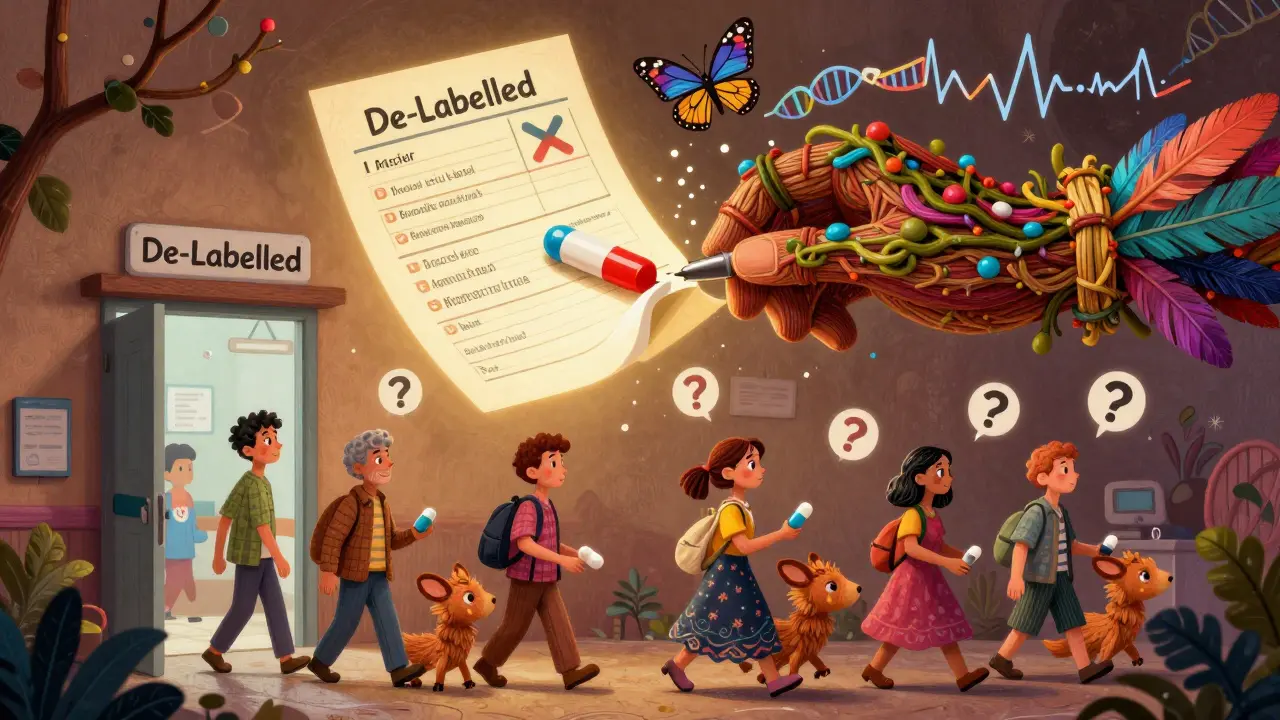
What’s Changing? The Future Is Here
Change is happening. The CDC launched the “Allergy Alert Initiative” in 2024, funding 12 regional centers to help safety-net hospitals set up testing programs. Epic Systems, which runs EHRs in 84% of U.S. hospitals, added an automated penicillin allergy assessment tool in 2021. Since then, it’s helped remove nearly 200,000 false labels.
Telemedicine is making it easier too. In the Netherlands, over 800 patients completed remote assessments-filling out forms, talking to a nurse via video, and then taking their first dose at home under supervision. The success rate? 96%. Zero severe reactions.
And starting in 2025, Medicare will start measuring how well hospitals reduce inappropriate antibiotic use in patients with penicillin allergy labels. Hospitals that don’t improve will lose money.
What You Can Do Right Now
If you’ve been told you’re allergic to penicillin-or any beta-lactam antibiotic-here’s what to do:
- Check your medical records. Is the allergy listed as “penicillin” or “amoxicillin”? If it’s broad, that’s a red flag.
- Ask yourself: Was it really an allergy? Or was it a rash, nausea, or diarrhea? Those aren’t true allergies.
- Ask your doctor: “Can I be tested to confirm this?”
- Ask if they use PEN-FAST or another validated tool to assess your risk.
- If you’re low-risk, request an oral challenge. It’s safe, fast, and free of needles.
- If you’re moderate or high-risk, ask for a referral to an allergist.
Don’t wait for your next infection. Don’t assume the label is right. Ask. Get tested. Clear your record. You might be surprised by what you find-and how much better your care can be.
Frequently Asked Questions
Can I outgrow a penicillin allergy?
Yes. Most people who think they’re allergic to penicillin never had a true allergy to begin with. Even if you did have one as a child, the immune system often forgets it. Studies show that 80% of people who had a true penicillin allergy in childhood lose it after 10 years without exposure. Testing is the only way to know for sure.
Is penicillin allergy testing covered by insurance?
Most insurance plans, including Medicare and Medicaid, cover allergy testing when it’s medically necessary. Skin testing and oral challenges are considered standard care by the American Academy of Allergy, Asthma & Immunology. If your provider says it’s not covered, ask them to cite the specific reason-many times, it’s a misunderstanding.
What if I have a reaction during testing?
Reactions during testing are rare and almost always mild-like a small rash or itching. Medical teams are trained to handle them immediately. Epinephrine and other emergency tools are always on hand. In over 100,000 tests performed in the U.S. and Europe, severe reactions have occurred in less than 0.5% of cases. The risk of not testing-using worse antibiotics-is far higher.
Can I be allergic to one penicillin but not another?
Absolutely. Penicillin is a family of drugs. Amoxicillin, ampicillin, and penicillin G are closely related, but others like cephalexin (a cephalosporin) have much lower cross-reactivity. If you’re allergic to amoxicillin, you might still safely take cephalexin. That’s why testing should be specific-not just “penicillin allergy.” Always ask for clarification on which drug you reacted to.
How long does the whole process take?
For low-risk patients, it can be done in one visit-about 90 minutes total. Skin test takes 20 minutes, then you wait 15 to 20 minutes. If negative, you take the first dose, wait 30 minutes, then the full dose. You’re observed for another 30 minutes. That’s it. For higher-risk patients, it may take two visits: one for skin testing, another for the challenge.
Next Steps
If you’re still unsure where to start, ask your primary care provider for the PEN-FAST questionnaire. If they don’t know it, ask them to look up the 2022 AAAAI guidelines on penicillin allergy evaluation. You can also check with your local hospital’s infectious disease or pharmacy department-they often run de-labeling clinics.
Don’t let an old label limit your care. You deserve the best, safest, and most effective treatment. And sometimes, that just means asking one simple question: “Could I have been mislabeled?”
Siobhan K.
December 21, 2025 AT 00:40Brian Furnell
December 21, 2025 AT 06:40Orlando Marquez Jr
December 21, 2025 AT 07:30Christina Weber
December 22, 2025 AT 22:36Cara C
December 23, 2025 AT 23:20Jerry Peterson
December 25, 2025 AT 01:20Sarah Williams
December 26, 2025 AT 23:24