
Elderberry & Immunosuppressant Interaction Checker
Step 1: Select Your Medication
Select the medication you are currently taking (if any).
Step 2: Select Supplement/Action
What are you considering adding to your routine?
Elderberry
Extract/Syrup
Cooked
Berries
Vitamin D
Echinacea
Select a combination to see results
Please select a medication and a supplement above to analyze potential interactions.
Imagine you just caught a nasty cold. Your immune system is running hot, fighting off the virus. Now imagine your doctor has prescribed medication specifically designed to slow down that same immune system because it’s attacking your own body or threatening a new organ. What happens when you mix these two opposing forces? That is exactly the dilemma facing millions of people who take immunosuppressants, which are drugs used to suppress the immune system in conditions like rheumatoid arthritis or after organ transplants. Adding elderberry, a popular herbal supplement known for boosting immunity, into this equation creates a dangerous contradiction. It’s like stepping on the gas and the brake at the same time.
The core issue isn’t just theoretical; it’s a documented medical concern. Elderberry (Sambucus nigra) is famous for its ability to shorten the duration of flu symptoms. But for someone taking immunosuppressive therapy, that "boost" can undermine their treatment plan, potentially leading to disease flares or even organ rejection. If you are managing an autoimmune condition or living with a transplanted organ, understanding this interaction could save you from serious health complications.
How Elderberry Activates the Immune System
To understand the risk, we first need to look at what elderberry actually does inside your body. Elderberry isn’t just a tasty berry; it’s packed with bioactive compounds, particularly anthocyanins. These are the pigments that give the berries their deep purple color, but they also have powerful biological effects. In healthy individuals, anthocyanins help trigger an immune response against viruses.
Research published in the Journal of Primary Health Care (2021) highlights that elderberry increases the production of specific signaling proteins called cytokines. Specifically, it boosts interleukin-6 and tumor necrosis factor-alpha. Think of cytokines as the alarm bells of your immune system. When you have a virus, you want those alarms ringing loud to call in the white blood cells. However, if you are on immunosuppressants, your goal is to keep those alarms quiet. By stimulating cytokine production, elderberry directly counteracts the mechanism of action of many immunosuppressive drugs.
A pivotal 2016 study by Tiralongo et al., published in the journal Nutrients, demonstrated this effect clearly. The study showed that elderberry extract significantly reduced cold duration in air travelers by enhancing immune activity. While this is great news for the general public, it serves as a red flag for patients whose immune systems need to be kept in check. The dose matters here too; clinical significance often appears at doses around 300mg of standardized extract taken multiple times daily, levels commonly found in commercial syrups and capsules.
Which Medications Are Affected?
Not all immunosuppressants work the same way, but many are vulnerable to interference from immune-stimulating herbs. The interaction is classified as "moderate-risk" by sources like RxList (2023 update), meaning it requires careful monitoring or avoidance. Here are some of the most common medications that may interact negatively with elderberry:
- Azathioprine (Imuran): Often used for lupus, Crohn’s disease, and organ transplants.
- Cyclosporine (Neoral, Sandimmune): A potent drug for preventing organ rejection and treating psoriasis.
- Mycophenolate Mofetil (CellCept): Commonly prescribed for kidney, heart, and liver transplants.
- Tacrolimus (Prograf): Another critical anti-rejection medication.
- Prednisone (Deltasone): A corticosteroid used to reduce inflammation and suppress immune responses.
- Sirolimus (Rapamune): Used in transplant patients and certain cancers.
If you are taking any of these, or similar disease-modifying antirheumatic drugs (DMARDs) like methotrexate or infliximab (Remicade), adding elderberry could reduce the effectiveness of your prescription. This doesn’t mean the drug stops working entirely, but it might not work well enough to prevent a flare-up or protect your transplanted organ.
| Supplement | Primary Mechanism | Risk with Immunosuppressants | General Safety Profile |
|---|---|---|---|
| Elderberry | Increases cytokines & interferes with viral entry | High/Moderate: May counteract drug efficacy | Safe for general public; unsafe for immunocompromised |
| Echinacea | Stimulates white blood cell activity | High: Known to stimulate immune response | Generally avoided by transplant/autoimmune patients |
| Vitamin D | Regulates immune function (anti-inflammatory) | Low: Often recommended alongside meds | Safe; deficiency linked to increased flare risk |
| Zinc | Supports immune cell development | Low/Moderate: High doses may cause issues | Safe in standard dietary amounts |
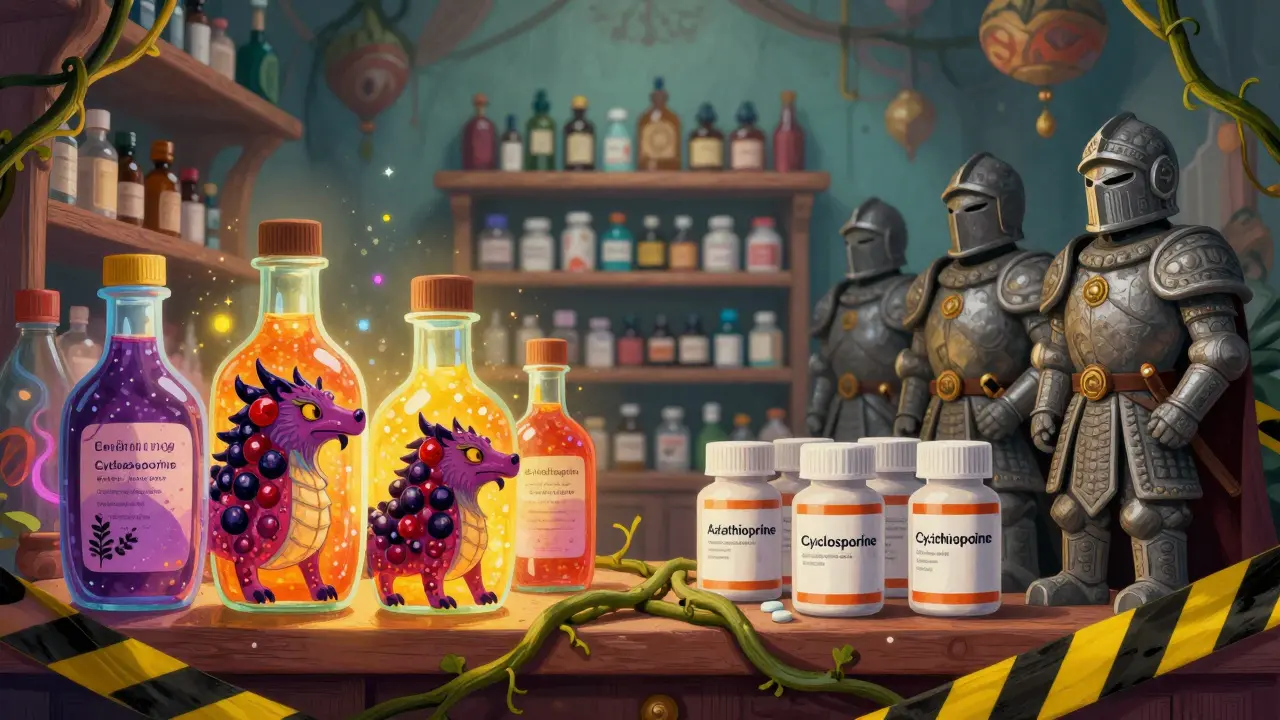
The Debate: Is the Risk Real or Overstated?
Science is rarely black and white, and this topic is no exception. While the consensus among major health organizations leans toward caution, there is some debate within the medical community. A 2021 systematic review (PMID: 33827515) argued that there is "no evidence that elderberry overstimulates the immune system" in a way that causes harm, focusing primarily on respiratory illness outcomes rather than long-term autoimmune stability.
However, critics of this view point out that the studies supporting safety were conducted on healthy volunteers or those with acute viral infections, not on patients with chronic autoimmune diseases or recent organ transplants. Dr. Baker, co-author of the 2016 Nutrients study, noted that elderberry’s effects are "context-dependent." This means while it might not cause immediate disaster for everyone, the potential for reducing drug efficacy remains a valid concern, especially for high-stakes scenarios like post-transplant care.
The American Society of Transplantation updated its guidance in May 2023, recommending individualized risk assessments rather than a blanket ban. They noted that calcineurin inhibitors (like tacrolimus and cyclosporine) are more sensitive to these interactions than corticosteroids. This nuance is crucial: your risk depends heavily on which immunosuppressant you are taking and how stable your condition is.
Real-World Patient Experiences
Beyond clinical trials, patient forums offer stark real-world examples of why caution is necessary. On the Mayo Clinic Connect platform, a kidney transplant recipient shared that their immunologist ordered them to stop elderberry supplements immediately after noticing their tacrolimus levels had dropped by 25%. Stable drug levels are vital for preventing rejection; a drop like that can be life-threatening.
Similarly, discussions in the r/Transplant community on Reddit highlight cases where liver transplant patients experienced rejection episodes shortly after starting elderberry syrup for cold prevention. One ulcerative colitis patient reported increased flare-ups after combining elderberry with Remicade (infliximab). While anecdotal, these stories align with the pharmacological theory: stimulating the immune system while trying to suppress it leads to instability.
Conversely, some patients report no issues. A lupus patient on CellCept mentioned taking elderberry for three winters without problems. However, this represents unmonitored anecdotal evidence. Just because a reaction didn’t happen doesn’t mean the risk wasn’t present. Without regular blood tests tracking disease markers and drug levels, it’s impossible to know if the supplement was silently undermining their treatment.

Safety Guidelines and Alternatives
If you are considering elderberry, follow these practical steps to ensure your safety:
- Consult Your Specialist First: Never start elderberry if you are on immunosuppressants without explicit approval from your rheumatologist, gastroenterologist, or transplant coordinator.
- Avoid During Active Disease: Even if your doctor permits it during remission, avoid elderberry during active flare-ups. You do not want to add fuel to the fire.
- Check Product Labels: Elderberry comes in juices, gummies, syrups, and extracts. Standardized extracts (often 300mg+) carry higher risks than occasional culinary use of cooked berries.
- Consider Safer Alternatives: Vitamin D is widely recommended for immune regulation in autoimmune patients. Unlike elderberry, vitamin D helps modulate (balance) the immune system rather than aggressively stimulating it. A 2022 survey found that 78% of rheumatologists prefer suggesting vitamin D over elderberry for their patients.
For organ transplant recipients, the guidance is stricter. Sweet’s Elderberry, a major manufacturer, explicitly states that anyone who has received an organ transplant should avoid elderberry entirely. The European Medicines Agency issued a specific safety communication in 2021 warning about this interaction, highlighting the regulatory awareness of the risk.
Looking Ahead: Research and Regulation
The landscape of herbal medicine and drug interactions is evolving. The National Institutes of Health initiated a Phase II clinical trial (NCT05213456) in January 2023 to specifically examine elderberry’s impact on tacrolimus levels in kidney transplant patients. Preliminary results are expected later in 2024, which may provide clearer data on the magnitude of this interaction.
Meanwhile, the global elderberry market continues to grow, reaching $1.27 billion in 2022. With approximately 14 million Americans using elderberry annually, the potential for unintended interactions is significant. Regulatory bodies like the FDA classify elderberry as "Generally Recognized As Safe" (GRAS), but this designation does not account for specific drug interactions. This gap in consumer protection places the burden of caution squarely on the patient and their healthcare provider.
As research progresses, we may see the development of standardized elderberry extracts with reduced immunomodulatory activity, making them safer for vulnerable populations. Until then, the safest approach remains clear: if your immune system is being medically suppressed, keep herbal stimulants out of the picture.
Can I eat elderberries if I am on immunosuppressants?
Consuming small amounts of cooked elderberries in food is generally considered lower risk than taking concentrated supplements like syrups or capsules. However, because the active compounds (anthocyanins) are still present, you should consult your doctor before including them in your diet regularly. Unripe berries, stems, and leaves are toxic and should never be consumed.
Does elderberry interact with antibiotics?
Elderberry is not known to have significant direct interactions with most common antibiotics. Its primary concern lies with immunosuppressants and possibly diabetes medications, as it may affect blood sugar levels. Always inform your pharmacist about all supplements you are taking to rule out specific interactions with your prescription regimen.
Is elderberry safe for people with autoimmune diseases like Lupus or RA?
It is generally not recommended. Because elderberry stimulates the immune system, it can potentially worsen symptoms in autoimmune conditions such as Lupus, Rheumatoid Arthritis, and Multiple Sclerosis. Many rheumatologists advise avoiding it entirely to prevent disease flares, especially if you are taking disease-modifying antirheumatic drugs (DMARDs).
What is a safe alternative to elderberry for immune support?
Vitamin D is often cited as a safer alternative for patients on immunosuppressants. It helps regulate immune function without aggressively stimulating it. Other options include maintaining adequate zinc intake through diet and ensuring good sleep hygiene. Always discuss any new supplement with your healthcare provider first.
How long does it take for elderberry to leave your system?
While there is no formal washout period studied for elderberry, general clinical guidance suggests allowing at least 48 hours after stopping supplementation before undergoing procedures or starting new immunosuppressive therapies. This allows the body to clear the active compounds and return to baseline immune modulation.