Many people use cannabis or CBD for pain, anxiety, or sleep - but what happens when it mixes with your prescription meds? It’s not just a theoretical concern. Real people have ended up in the hospital because their blood thinners became too strong, or their seizure meds turned them into a zombie. The science is clear: cannabis doesn’t just sit quietly in your body. It actively interferes with how your body processes many common drugs.
How Cannabis Changes How Your Body Handles Medications
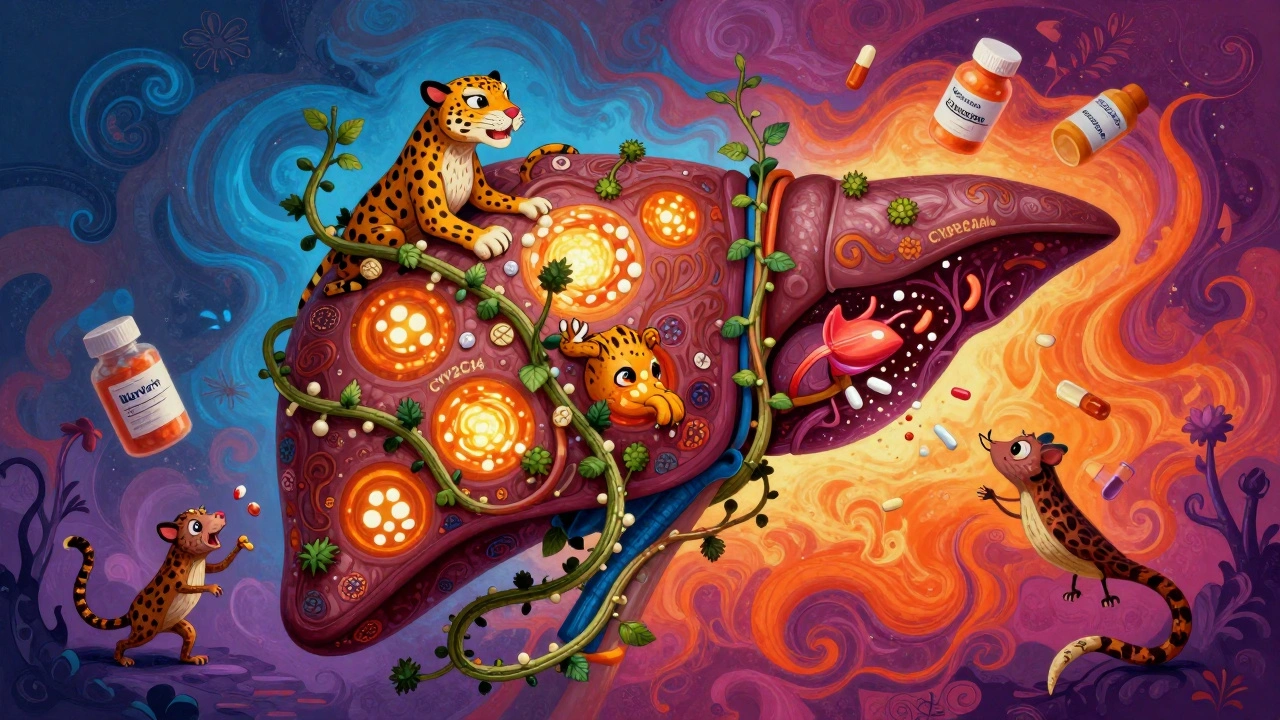
Your liver has a team of enzymes - called cytochrome P450 - that break down about 60% of all prescription drugs. Think of them like tiny garbage disposals. Now, CBD and THC act like rocks thrown into those disposals. They clog them up. When that happens, your meds don’t get broken down fast enough. They build up. And that’s when things get dangerous.
CBD is especially good at blocking two key enzymes: CYP3A4 and CYP2C19. THC blocks others like CYP1A2 and CYP2C9. These are the same enzymes that handle blood thinners, seizure meds, antidepressants, and even some heart drugs. So if you’re on warfarin, clobazam, or tacrolimus, and you start taking CBD oil, your body can’t clear those drugs like it used to. Levels can spike by 50%, 200%, even 500%.
It’s not just about pills. Smoking cannabis can also change how your body handles drugs - but in the opposite direction. Smoking triggers CYP1A2, which speeds up the breakdown of theophylline (used for asthma). That means your asthma meds might stop working as well. And if you’re drinking cannabis tea? That’s a whole different story. Some forms don’t interfere at all. The delivery method matters as much as the dose.
High-Risk Medications: When Cannabis Can Be Dangerous
Some drugs are just too risky to mix with cannabis. These aren’t "maybe" situations. They’re "call your doctor right now" situations.
Warfarin (Coumadin) is the most documented danger. People on warfarin who start CBD have seen their INR - a measure of blood clotting - jump by nearly half in just a few days. One study tracked 17 cases where people bled internally after adding CBD. Bruising, nosebleeds, black stools - all signs the blood is too thin. The American College of Clinical Pharmacy says: avoid this combo unless you’re under strict supervision. Even weekend use can triple your bleeding risk within 48 hours.
Tacrolimus, used by transplant patients to stop organ rejection, is another red flag. One case report showed levels shooting up 500% after CBD use. That’s not a side effect - that’s organ toxicity waiting to happen. These patients need constant blood tests. Add cannabis, and you’re gambling with your life.
Clobazam, an anti-seizure drug, is the most studied interaction. In patients with epilepsy, CBD can increase clobazam levels by 60% to 500%. That’s why neurologists routinely cut clobazam doses by 25-50% when patients start CBD. One Reddit user wrote: "I couldn’t walk straight. My neurologist cut my dose by 40% immediately." That’s not a coincidence. It’s science.
Moderate Risk: Watch for These
These combos won’t kill you overnight, but they can make you feel awful - or worse.
Benzodiazepines like alprazolam (Xanax) or lorazepam (Ativan) already make you drowsy. Add cannabis, and sedation spikes by 35-60%. Elderly patients are especially vulnerable. In Pennsylvania, one study found that combining the two increased fall risk by 47%. That’s not just inconvenient - it’s a fracture waiting to happen.
Opioids like oxycodone or morphine slow your breathing. Cannabis does the same. Together, they can suppress your respiratory drive more than either alone. One study showed morphine clearance dropped by 20-30% with CBD use. That’s why some pain clinics now screen for cannabis use before prescribing opioids.
Calcium channel blockers like amlodipine (Norvasc) lower blood pressure. Add CBD, and levels can rise 30-40%. That can lead to dizziness, fainting, or even heart rhythm problems. One patient reported passing out after starting CBD oil while on amlodipine. His doctor had to lower his dose.
Lower Risk - But Still Not Risk-Free
Some interactions are minor. That doesn’t mean they’re harmless.
SSRIs like sertraline (Zoloft) or fluoxetine (Prozac) might see a 10-15% increase in blood levels with CBD. But in real-world use, 41% of people on SSRIs reported no noticeable change. Still, if you’re new to CBD and suddenly feel overly anxious, dizzy, or nauseous, it could be this interaction. Don’t assume it’s "just in your head."
Statins like atorvastatin (Lipitor) can also rise 20-25% with CBD. No cases of muscle damage (rhabdomyolysis) have been confirmed - but that doesn’t mean it can’t happen. If you start CBD and feel unexplained muscle pain or weakness, get checked.
What About Full-Spectrum vs. Isolate?
Not all CBD is the same. Full-spectrum products contain trace THC (up to 0.3%) and other plant compounds. Isolates are pure CBD.
Research shows full-spectrum CBD inhibits liver enzymes 22-37% more than isolates at the same dose. That’s the "entourage effect" - but it’s not always good. If you’re on warfarin or clobazam, isolate might be safer. But if you’re using it for pain or anxiety, full-spectrum might work better. It’s a trade-off. You need to know what you’re taking - and tell your doctor.
Dose Matters - Even Small Amounts Can Trigger Reactions
You don’t need to be taking grams of CBD to cause problems. Interaction risks become noticeable at doses above 20 mg per day. But some people react to as little as 5-10 mg, especially if they’re on clobazam or warfarin.
One patient started with 10 mg of CBD oil for sleep. Within a week, her INR jumped from 2.1 to 4.8. She nearly bled out. Another took 15 mg of CBD daily with his alprazolam and couldn’t drive for three days. These aren’t rare cases. They’re common.
And timing? Some experts say take CBD two hours apart from your meds. But there’s no solid proof this works. The best advice? Don’t guess. Test.
What Should You Do?
Here’s what real clinicians recommend:
- Be honest. Tell your doctor or pharmacist you’re using cannabis or CBD - even if you think it’s "just a little." They need to know.
- Know your product. Is it isolate or full-spectrum? What’s the CBD and THC content? Write it down.
- Check your meds. If you’re on warfarin, tacrolimus, clobazam, or any blood pressure or seizure drug, assume there’s a risk until proven otherwise.
- Get tested. Before starting CBD, ask for a baseline blood test (INR, drug levels). Retest 48-72 hours after you start using it.
- Start low, go slow. If you’re adding CBD, begin with 5 mg. Wait a week. See how you feel. Don’t jump to 50 mg overnight.
- Watch for red flags. Unusual bruising, dizziness, confusion, extreme sleepiness, or muscle pain? Stop and call your doctor.
Why This Is Getting Worse
The market is exploding. Over 58 million Americans used cannabis in 2022. Nearly half of them were on prescription meds. But only 12 states require pharmacists to counsel patients on interactions. Most don’t even ask. A 2023 survey found 76% of community pharmacists feel unprepared to answer these questions.
And the products? They’re unregulated. A 2023 study found 70% of online CBD products had inaccurate labels - some had way more THC than advertised. Others had no CBD at all. You can’t trust what’s on the bottle.
The FDA has received over 1,300 reports of adverse events linked to cannabis-drug interactions since 2018. That’s just what got reported. The real number is likely ten times higher.
The Bottom Line
Cannabis isn’t a magic herb that plays nice with everything. It’s a powerful substance that changes how your body handles drugs. For some people, it’s life-changing. For others, it’s a silent danger.
If you’re taking any prescription medication - especially blood thinners, seizure meds, or heart drugs - don’t assume it’s safe. Don’t rely on Reddit advice. Don’t trust a label that says "natural" or "pure." Talk to your doctor. Get blood tests. Monitor yourself.
There’s no shame in asking. Your life might depend on it.
Can I take CBD with my blood thinner like warfarin?
No - not without close medical supervision. CBD can increase warfarin levels by 29-48% within 72 hours, raising your INR to dangerous levels. This can cause serious bleeding, including internal bleeding. If you’re on warfarin and want to try CBD, your doctor must check your INR before and within 48-72 hours of starting. Some experts recommend stopping warfarin use entirely if you plan to use CBD regularly.
Does smoking cannabis have the same interactions as CBD oil?
Not always. Smoking cannabis can induce the CYP1A2 enzyme, which speeds up the breakdown of drugs like theophylline (used for asthma), making them less effective. But CBD oil - especially when taken orally - inhibits enzymes like CYP3A4 and CYP2C19, which can cause dangerous buildup of other drugs. The route of administration changes how the interaction works. CBD oil is more likely to cause problems with blood thinners and seizure meds; smoking is more likely to interfere with asthma or psychiatric drugs.
Is CBD isolate safer than full-spectrum CBD?
Yes, for drug interactions. Full-spectrum CBD contains trace THC and other cannabinoids that enhance enzyme inhibition - up to 37% more than pure CBD isolate. If you’re on medications metabolized by CYP3A4 or CYP2C19 (like warfarin, clobazam, or statins), isolate is the safer choice. But if you’re using it for pain or anxiety, full-spectrum may work better. Weigh the benefits against the risk, and always consult your doctor.
Can I just space out my CBD and meds to avoid interactions?
There’s no solid evidence that spacing them out (like taking CBD two hours before or after your meds) prevents interactions. The liver enzymes stay blocked for hours - sometimes days. Even if you take CBD at night and your warfarin in the morning, the inhibition is still happening. The only reliable way to avoid risk is to avoid the combo, or monitor drug levels closely under medical supervision.
What should I tell my pharmacist if I use cannabis?
Tell them exactly what you’re using: the product type (oil, vape, edible), the CBD and THC content (if known), the dose (mg/day), and how often you use it. Don’t say "I take CBD" - say "I take 25 mg of full-spectrum CBD oil every night." The more specific you are, the better they can check for interactions. Most pharmacists aren’t trained on this - so give them the facts so they can help you.
Are there any medications that are safe to take with CBD?
There’s no official list of "safe" combinations. But medications not metabolized by CYP3A4, CYP2C19, or CYP2C9 are less likely to interact. Examples include gabapentin, levothyroxine, and some antibiotics like azithromycin. Still, even these can have unpredictable effects. The safest approach is always to check with your doctor or pharmacist before combining anything with CBD or THC.
Audrey Crothers
December 12, 2025 AT 20:40I started CBD for my anxiety and didn’t tell my doc I was on warfarin... until I started bruising like a grape. 😅 One week later, ER visit. Now I only take 5mg isolate and get my INR checked every 2 weeks. Don’t be me.
Stacy Foster
December 14, 2025 AT 03:34THE PHARMA COMPANIES ARE HIDING THIS. CBD is cheaper than their drugs so they’re silencing the science. You think they want you to know that a $20 bottle of oil can mess with your $500/month meds? They’re terrified. And they’re lobbying to keep it unregulated so you stay sick and dependent. Wake up.
Robert Webb
December 15, 2025 AT 03:16Really glad someone laid this out so clearly. I’m a nurse and I see this all the time - people think ‘natural’ means ‘safe,’ but your liver doesn’t care if it’s a plant or a pill, it just sees a chemical. The CYP450 system is like a highway with toll booths - CBD is a truck that blocks all the exits. And it doesn’t matter if you take it at night and your pill in the morning - the enzymes are still clogged for hours. I always tell patients: if you’re on anything that says ‘monitor blood levels,’ assume CBD will mess with it. And if you’re not sure? Ask your pharmacist. They’re the unsung heroes here.
Rob Purvis
December 16, 2025 AT 15:42Just wanted to add: I’ve been on clobazam for epilepsy since I was 12. When I started 15mg CBD oil, I couldn’t walk without falling over. My neurologist cut my clobazam by 40% right away. I thought I was having side effects from the CBD - turns out it was the clobazam spiking. Now I use isolate, and I track my levels monthly. It’s not magic, but it’s manageable. Just don’t wing it. And please, please - tell your doctor. Even if you think they’ll judge you. They’ve seen worse.
Laura Weemering
December 17, 2025 AT 04:13It’s fascinating how the body’s enzymatic pathways are so fragile... and yet we treat cannabinoids like herbal tea. The epistemic arrogance of self-experimentation is staggering. We’ve normalized biohacking without bio-literacy. The CYP3A4 inhibition isn’t a ‘side effect’ - it’s a systemic pharmacokinetic cascade. And yet, people are popping gummies like candy while on statins and SSRIs... as if the liver is a disposable sponge. The irony? The very people who scream about ‘big pharma’ are the ones enabling it by refusing to engage with clinical science.
Levi Cooper
December 19, 2025 AT 01:26Why are we even talking about this? In my day, people took their meds and stayed off that weed stuff. Now everyone’s mixing CBD with their heart pills like it’s a smoothie. It’s weak. America’s gone soft. You want to feel better? Take your medicine like an adult. Don’t go chasing ‘natural’ fixes that make your body a science experiment. This isn’t progress - it’s laziness dressed up as wellness.
Nathan Fatal
December 20, 2025 AT 10:27One thing no one talks about: the placebo effect of fear. Many people who report side effects from CBD + meds are actually reacting to anxiety about the interaction, not the interaction itself. But that doesn’t mean we ignore the science - it just means we need to be thoughtful. If you’re on warfarin and start CBD, test your INR. If you’re on clobazam and feel foggy, talk to your neurologist. This isn’t about demonizing cannabis - it’s about respecting physiology. Knowledge > fear. And knowledge requires honesty - with yourself and your doctor.
wendy b
December 21, 2025 AT 15:41OMG I just realized I’ve been taking full spectrum CBD with my amlodipine for 3 months?? I thought it was fine because it was ‘organic’?? I’m so dumb. I’m gonna call my doc tomorrow. Also, I spelled ‘clobazam’ wrong in my notes. oops.
Donna Anderson
December 22, 2025 AT 07:23Y’all are overcomplicating this. I take 10mg CBD every night with my blood pressure med and I feel AMAZING. No dizziness, no bruising, no drama. If it works for you, great. If it doesn’t, stop. Listen to your body. Don’t let fear-mongering stop you from feeling better. 🌿💪
sandeep sanigarapu
December 23, 2025 AT 08:09Thank you for this detailed post. In India, many elderly patients use cannabis for pain without medical advice. This information must be shared in local languages. Safety is not a privilege. It is a right.
Ashley Skipp
December 23, 2025 AT 12:38So basically if you’re on any med at all you can’t touch CBD? Even a little? That’s ridiculous. I’ve been taking 5mg for sleep for a year and my doctor hasn’t said a word. Maybe your meds are the problem, not the CBD.